
Arun Jaitley’s Enduring Legacy: BJP’s Troubleshooter Who Earned Rivals’ Respect
Arun Jaitley’s legacy reaches beyond finance, spanning GST, IBC, Parliament and BJP strategy, while his warmth and friendships with PM Narendra Modi and former PM Atal Bihari Vajpayee remain central to how India remembers him today.
- India News
- 8 min read

;'%3e%3cpath%20d='m8,15.99c4.41,0,7.99-3.58,7.99-7.99S12.41,0,8,0,0,3.59,0,8s3.58,7.99,7.99,7.99Z'%20style='stroke:%23fff;%20stroke-miterlimit:10;%20stroke-width:.02px;'/%3e%3cpath%20d='m3.08,3.37l3.82,5.11-3.84,4.15h.87l3.37-3.64,2.72,3.64h2.94l-4.04-5.39,3.58-3.87h-.86l-3.1,3.35-2.5-3.35h-2.94Zm1.27.64h1.35l5.97,7.99h-1.35l-5.97-7.99Z'%20style='fill:%23fff;'/%3e%3c/g%3e%3c/svg%3e)


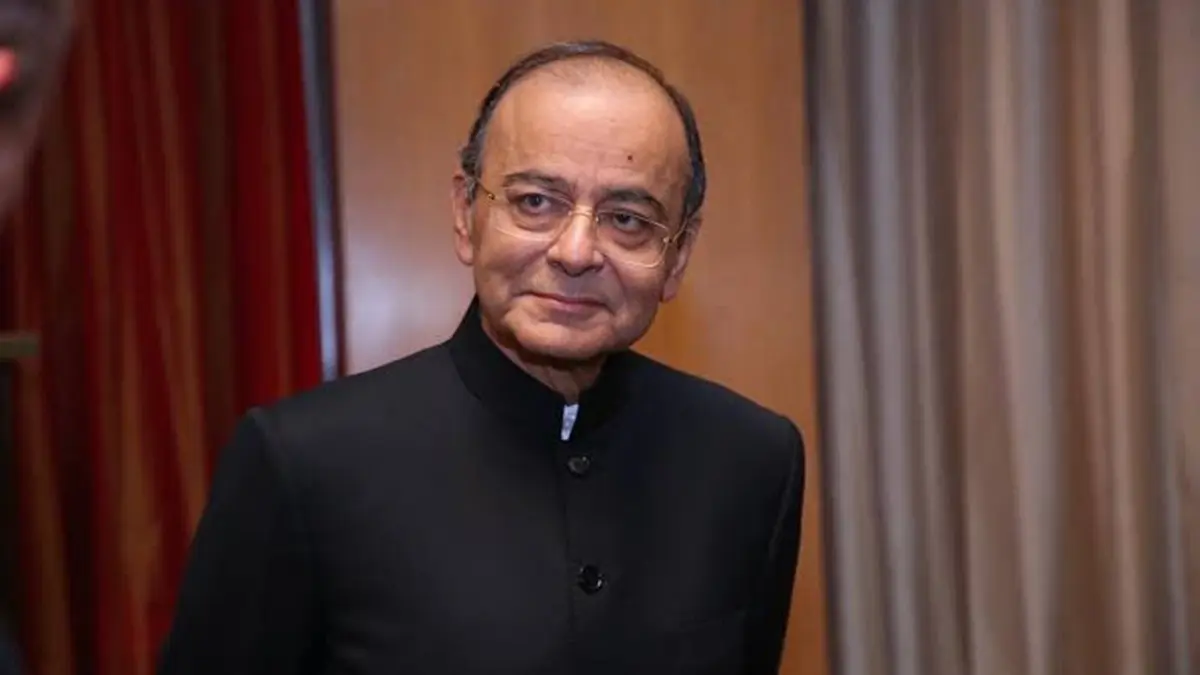
New Delhi: In Indian politics, there are those who win elections and those who win trust across the aisle, irrespective of party or organisation. Arun Jaitley, who would have turned 73 this December, belonged undoubtedly to the second kind.
Born in the year 1952 on December 28 and gone too soon on August 24, 2019 at the age of 66, at New Delhi AIIMS, he remains one of the most consequential figures in the politics of modern India. He is remembered not merely as a former Union finance minister, but as an articulate parliamentarian, a master strategist, a senior advocate of the Supreme Court and the political troubleshooter every prime minister wanted by his side, whether former PM Atal Bihari Vajpayee or present PM Narendra Modi.
New Delhi carries his imprint in more ways than one, with his name in the bold letters of the Arun Jaitley Stadium at Kotla, and it is there, more substantially, in the Goods and Services Tax (GST) that still powers the nation's fiscal architecture. Over 6 years after his passing, he is remembered as a rare leader who never needed to win a Lok Sabha election to remain indispensable.
His story began in the buzzing corridors of Shri Ram College of Commerce and the Faculty of Law in Delhi University. The elected president of the Delhi University Students' Union in 1974 on an ABVP ticket, he became a prominent face of Jayaprakash Narayan's anti-corruption movement and paid the price with 19 months of preventive detention during the Emergency. The early encounter with authoritarianism shaped a lifelong fidelity to parliamentary democracy, constitutionalism and free speech.
Advertisement
Rising from that student firebrand to the Leader of the Opposition (LoP) in the Rajya Sabha from 2009 to 2014, Leader of the House from 2014 to 2019, and holder of almost every key portfolio, including Law, Defence, Commerce, Corporate Affairs, Information and Broadcasting and Finance, under Atal Bihari Vajpayee and Narendra Modi, Jaitley's evolution was seamless. Nonetheless, beyond portfolios and policy, what endures is the personal memory, the sharp intellect, the easy humour, the persuasive manner and the rare willingness to engage with those who disagreed with him.
Architect Of Big-Ticket Economic Reforms
Arun Jaitley's 5-year tenure as Finance and Corporate Affairs Minister from 2014 to 2019 will be recorded as an era of structural change. He oversaw two of independent India's biggest economic disruptions, demonetisation of Rs 500 and Rs 1000 notes in November 2016, and the rollout of the GST. He chaired 32 of the first 36 GST Council meetings, taking over 900 decisions without a single vote, by evolving a consensus that even opposition-ruled states like West Bengal, Kerala and Punjab accepted. His formula was tactful, compensate states for revenue loss for 5 years through law, keep petroleum under GST legislation but leave the date to the Council, and ensure neither Centre nor states could veto.
Advertisement
Alongside GST, he piloted the Insolvency and Bankruptcy Code, which transformed debt recovery and restored balance sheets of banks, the Black Money Act, amendments to the Benami Act, the Fugitive Economic Offenders Act, the Monetary Policy Committee with a 4 percent inflation target, the merger of the Railway Budget with the General Budget, advancing the Union Budget date to February 1, abolishing plan and non-plan expenditure distinction, and merging 5 associate banks of SBI and Bharatiya Mahila Bank into SBI, and Vijaya Bank and Dena Bank into Bank of Baroda under the ‘Indradhanush’ banking reforms.
Consummate Strategist, Lawyer And Human Being
In politics, Arun Jaitley was valued for legal acumen and powers of persuasion and he demonstrated the same in the Vajpayee government, when he successfully piloted the 91st Constitutional Amendment to curb defections, ending the ‘Aaya Ram Gaya Ram’ culture. As LoP, he cornered the UPA on 2G, Commonwealth Games and coal allocation scams, and on the other hand backed the Women's Reservation Bill in 2010 because Atal Bihari Vajpayee believed in it. In 2017, it was his personal equation with Nitish Kumar, built over dinners where Kumar's favourite dishes were always served, that helped stitch a JD-U-BJP government in Bihar within hours.
Despite holding power, he remained a food connoisseur, cricket administrator as DDCA president, lover of old Hindi songs and a warm host at his Kailash Colony home. The bureaucrats still recall him as a minister who trusted their judgement and never made cabinet meetings tense. He was awarded the ‘Padma Vibhushan’ posthumously in 2020 for public affairs.
Former PM Atal Bihari Vajpayee, who had groomed Jaitley along with Sushma Swaraj under LK Advani's guidance, had immense faith in his young minister. Vajpayee once branded him as one of the party's sharpest minds who could articulate complicated ideas simply and handle the most challenging responsibilities with poise. Jaitley himself returned that admiration, calling Vajpayee "a leader par excellence who has worked tirelessly for the nation, a good orator, political leader, thinker and poet" and later writing that Vajpayee was the quintessential gentleman who taught consensus and harmony.
Journey From Student Activism To National Politics
Arun Jaitley’s political journey began during his student years as he was active in the ABVP and became involved in resistance during the Emergency, when he was arrested and detained. His early years helped shape the political conviction that later defined his public career.
A lawyer by profession and a senior advocate of the Supreme Court, Jaitley developed a reputation for combining legal precision with political communication. He became a prominent BJP voice in Parliament and was repeatedly relied upon to explain complicated policy questions in language accessible to the public.
His relationship with Atal Bihari Vajpayee was an important part of that evolution. During the Vajpayee years, Jaitley served in the Union government and handled portfolios including law and justice, information and broadcasting, commerce and industry and shipping. His proximity to the Vajpayee government also placed him at the centre of important debates over economic reform and governance.
Jaitley himself later called Vajpayee's death “a continuation of the era” rather than simply the conclusion, reflecting his belief that the former prime minister had laid foundations that subsequent generations would carry forward.
More Than A Finance Minister
Arun Jaitley's importance stretched far beyond the North Block, as he was the government's quintessential problem-solver, the man who could defend a complicated policy on the floor of the House in the morning, negotiate with Opposition leaders over lunch, brief editors in the evening and still find common ground with industry captains and chief ministers by night.
He earned himself a rare institutional respect, with the government hailing him as an outstanding parliamentarian, instrumental in steering landmark legislation through the Rajya Sabha where the NDA lacked a majority. Named Best Parliamentarian in 2010, he was a devoted defender of parliamentary convention, insisting that debate be anchored in facts, precedent and constitutional morality rather than mere partisanship.
PM Modi's Deeply Personal Tribute
Arun Jaitley was much more than a cabinet colleague for PM Narendra Modi during his first tenure between 2014-2019. On hearing of his death while abroad in Bahrain, the Prime Minister spoke emotionally about their decades-long association.
Prime Minister Modi's tributes captured the personal loss behind the public figure. On Jaitley's passing, PM Modi said from Bahrain, "With the demise of Arun Jaitley Ji, I have lost a valued friend, whom I have had the honour of knowing for decades. His insight on issues and nuanced understanding of matters had very few parallels. He lived well, leaving us all with innumerable happy memories. We will miss him!"
Later at the ‘Shradhanjali Sabha’ at Jawaharlal Nehru Stadium, he added with emotion, "He was a multifaceted personality. Jaitley-ji had health ailments, but if one spoke to him, he was more concerned about the nation. Serving the nation energised him. He was a political giant, towering intellectual and legal luminary."
6 Years On, The Imprint Endures
Like any major policymaker, Arun Jaitley's legacy is not without controversy, as supporters cite the GST, the Insolvency and Bankruptcy Code, banking reforms, tax formalisation and his stewardship of parliamentary governance as defining achievements. However, the opposition continues to debate the economic and social consequences of demonetisation, the early disruptions caused by GST and the economic record of the first term of the Modi government. He moved comfortably between courtroom arguments, parliamentary battles, cabinet negotiations and political strategy, and was termed after his death a gifted orator, a democrat, a man of integrity and a politician committed to value-based public life.
His contemporaries remembered him as a man who could be formidable in argument and warm in friendship, whose absence was felt not simply because a senior minister had died but because a person known for his counsel, wit and ability to connect had suddenly disappeared from India's political conversation.
Now, 6 years after his death in August 2019, Jaitley's imprint remains visible in the institutions and policies associated with the reform era he helped shape, ensuring that his legacy survives in 2 distinct though intertwined forms. In one form, it lives in the architecture of India's economic governance through GST, IBC and banking consolidation, and in the other, it endures in the memories of political colleagues across party lines who regarded him as a trusted friend, adviser and bridge-builder.
And now in 2026, Jaitley's legacy lives on through his son Rohan Jaitley at DDCA, the stadium that bears his name, and through a GST Council model of federal consensus that his successor Nirmala Sitharaman continues to follow.
Get Current Updates on India News, Entertainment News, Cricket News along with Latest News and Web Stories from India and around the world.