
Breaking the Cycle: How Kashmir Is Winning the Battle Against Terrorism
The sharp decline in local terrorism presents an opportunity for a lasting peace in the valley.
- India News
- 5 min read


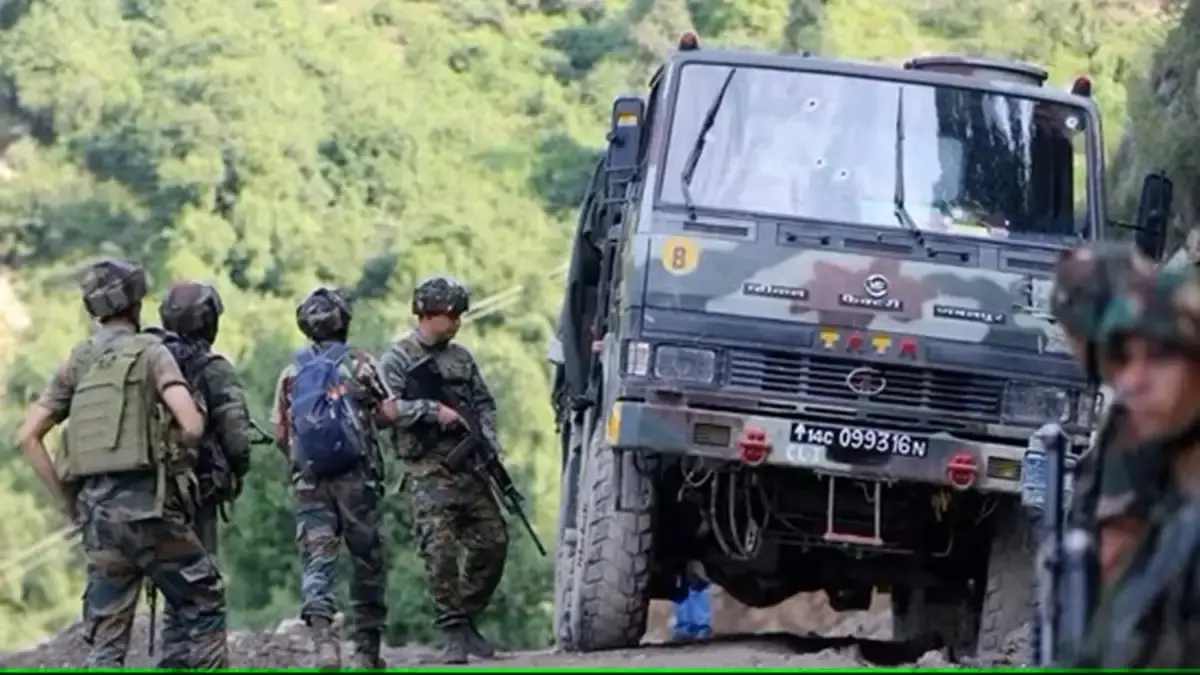
Srinagar: For the first time in 15 years, the number of local terrorists active in the Kashmir Valley has fallen to single digits, marking a major shift in the region’s security dynamics. Official data reveals that local recruitment into terrorist ranks has hit record lows, with only one new recruit identified so far in 2025—a resident of south Kashmir’s Kulgam district who went missing in January and was later confirmed to have joined terror ranks.
Senior police officials attribute this decline to a blend of intensified counter-terror operations, public disillusionment with terrorism, and the dismantling of long-standing propaganda networks.
“This is a significant milestone,” said a senior police officer. “For decades, terrorism in Kashmir was fed by external forces and internal sentiments, but today, that ecosystem has crumbled to a great extent.”
The roots of terrorism in Kashmir run deep, influenced by a series of political and social flashpoints over the decades:
Advertisement
1984 – Hanging of Maqbool Bhat: Widely regarded as the ideological father of Kashmiri separatism, Maqbool Bhat’s execution in Delhi’s Tihar Jail on February 11, 1984, is seen as one of the first major triggers that fueled separatist sentiments in the Valley. His hanging became a symbol of resistance, galvanizing early calls for an armed struggle and laying the groundwork for the insurgency that erupted in the late 1980s.
2013 – Hanging of Afzal Guru: The execution of Parliament attack convict Afzal Guru in 2013 reignited tensions in the Valley. Many youths viewed his hanging as an injustice, leading to a spike in local recruitment into terrorist groups.
Advertisement
2016 – Killing of Burhan Wani: Hizbul Mujahideen commander revolutionized local terrorism through social media. His carefully curated poster boy image—youthful, defiant, and armed—attracted scores of young Kashmiris to terrorist ranks. His death in July 2016 sparked months of unrest, mass protests, and a surge in local terrorism.
“These events created emotional and psychological turning points for the Valley’s youth,” said a retired intelligence officer. “Each incident planted deeper seeds of alienation and, in many cases, led directly to young boys picking up arms.”
Security officials point to Pakistan’s long-standing role in glamorizing terrorism in Jammu and Kashmir. For years, terror outfits, backed by Pakistani handlers, weaponized social media to romanticize the idea of “armed resistance.” Videos of terrorists brandishing AK-47s, issuing fiery statements, and posing in apple orchards would go viral, making terrorism appear aspirational to vulnerable youth.
“Social media became the new battleground,” said a top-ranking police official. “Young boys would see these videos and believe they were joining a cause, not a death sentence.”
Funerals of slain terrorists became recruitment hubs. Thousands would attend, waving flags and chanting slogans, with the spectacle often pushing more youth toward radicalization. Stone-pelting during encounters and after funerals became routine, leading to widespread damage to public property and clashes with security forces.
However, over the past few years, a calculated dismantling of this ecosystem has changed this paradise on earth-Kashmir:
Terrorists are now buried discreetly, often in the presence of only close family members. This prevents large gatherings that once doubled as recruitment drives. “We realized that funerals had become theatres for propaganda,” explained a police officer. “By stopping that, we removed a key tool from the terror playbook.”
Security agencies, in collaboration with cybercrime units, have neutralized dozens of social media pages and encrypted messaging channels used for recruitment. “Today, you won’t find those viral gun-wielding videos,” said an intelligence official. “We’ve managed to cut off that pipeline.”
With the breakdown of mass protests and funerals, incidents of stone-pelting have virtually ceased. “People saw how stone-pelting destroyed their towns—schools burned, shops looted, lives lost,” said a local shopkeeper in Pulwama. “Now, people just want peace.”
Police credit part of the decline to better governance and developmental outreach. Improved infrastructure, job creation, and stricter law enforcement have created conditions where terrorism finds fewer takers. Crackdowns on narco-terrorism, attaching properties under UAPA and terror financing have also severed crucial funding lines that once fueled insurgent operations.
“People now see the futility of the cycle of violence,” said a senior officer. “Law is being implemented without bias, and communities feel more secure. That’s a huge deterrent against terrorism.”
Parents and community elders, who once hesitated to engage with law enforcement, are now active in dissuading youth from extremist paths. “We’ve had families call us directly when their children go missing,” said the officer. “That never used to happen before.”
Despite the declining numbers, security agencies remain cautious. Intelligence reports suggest Pakistan is attempting to push more foreign terrorists across the Line of Control before the summer—a period that traditionally sees heightened infiltration efforts.
Union Home Minister Amit Shah, in a high-level security review on February 11, reiterated the government’s focus on a “Zero Terror Plan” for Jammu and Kashmir. “Modi government is fully committed to a terror-free Jammu and Kashmir,” Shah stated. “We are dismantling every pillar of the terror ecosystem—from terror financing to narco-terrorism—and will continue to stay vigilant.”
Shah emphasized the need for synergy among intelligence agencies and the use of technology in counter-terror efforts. He also directed officials to counter anti-India propaganda and ensure that the real picture of progress and peace reaches the public.
The sharp decline in local terrorism presents an opportunity for a lasting peace in the valley. While security agencies remain alert to external threats, the fall in local recruitment reflects a broader societal shift.
“We’ve broken the chain of glorification that once pulled young boys into this dark path,” said a senior police officer. “It took decades of damage to get here, but today, Kashmiris are seeing the benefits of peace over conflict.”
The Valley, which once echoed with slogans of defiance during terrorist funerals, now seeks quiet. Stone-pelting has ceased, public spaces thrive again, and young boys, once drawn to guns, are now returning to books, jobs, and families.
“It’s not about statistics,” said the officer. “It’s about changing mindsets—and that’s where we’ve finally made a dent.”
Get Current Updates on India News, Entertainment News, Cricket News along with Latest News and Web Stories from India and around the world.