
Calling Someone a "Motherf***er" Isn't Always Criminal Obscenity: Supreme Court Draws Strict Legal Line
The Supreme Court rules that vulgar expletives and swear words do not automatically equal criminal obscenity unless they appeal to prurient interests.
- India News
- 4 min read

;'%3e%3cpath%20d='m8,15.99c4.41,0,7.99-3.58,7.99-7.99S12.41,0,8,0,0,3.59,0,8s3.58,7.99,7.99,7.99Z'%20style='stroke:%23fff;%20stroke-miterlimit:10;%20stroke-width:.02px;'/%3e%3cpath%20d='m3.08,3.37l3.82,5.11-3.84,4.15h.87l3.37-3.64,2.72,3.64h2.94l-4.04-5.39,3.58-3.87h-.86l-3.1,3.35-2.5-3.35h-2.94Zm1.27.64h1.35l5.97,7.99h-1.35l-5.97-7.99Z'%20style='fill:%23fff;'/%3e%3c/g%3e%3c/svg%3e)


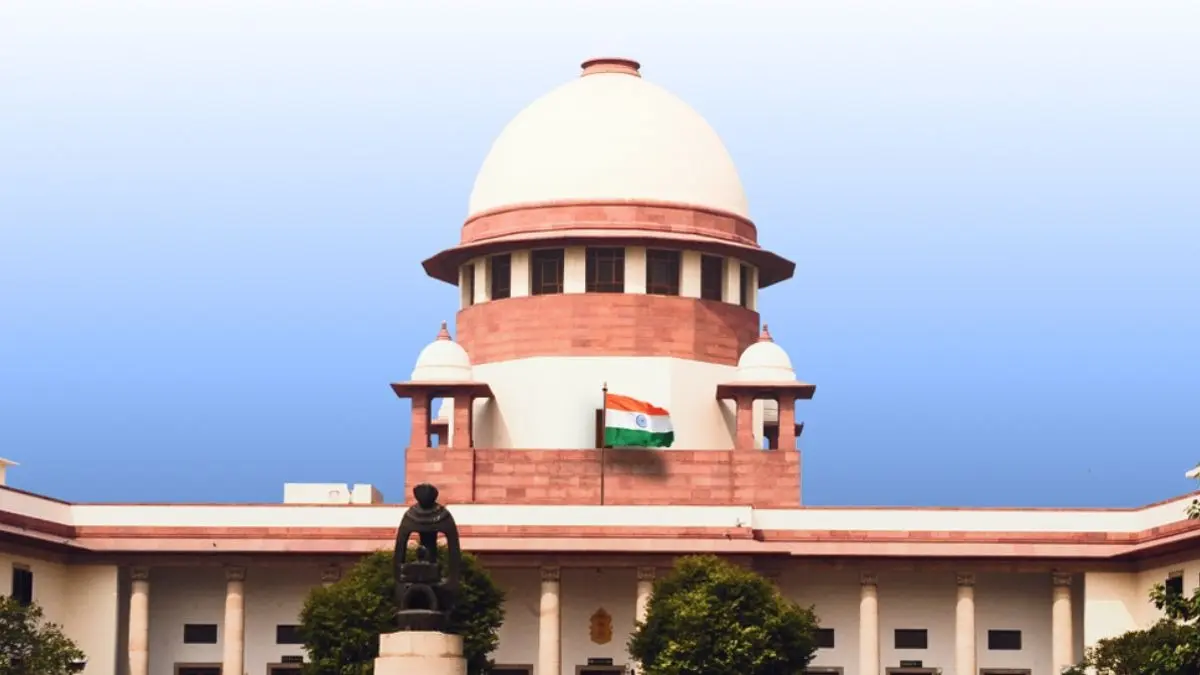
Does using vulgar swear words automatically make you guilty of criminal obscenity? The Supreme Court of India answered this question with a definitive "no," drawing a sharp legal line between being deeply offensive and breaking obscenity laws. The top court ruled that while vulgar expletives are highly uncivil, they do not constitute obscenity unless they cross a specific threshold: they must be lascivious, appeal to prurient interests, and have the potential to deprave or corrupt those who hear them.
The landmark clarification came as a Bench of Justices Sanjay Karol and Vipul M Pancholi partly allowed the appeal of a man previously convicted of obscenity during a heated land dispute.
The Legal Distinction Between Vulgarity and Obscenity
The top court explicitly separated bad manners from criminal behavior, emphasizing that the law requires a much higher standard to label speech as obscene.
As reported by Bar and Bench, the Court noted:
Advertisement
“Let’s be clear, legally, obscenity is not synonymous with ‘vulgarity’, ‘abuse’ or ‘profanity’. Use of mere swear words, profanities and vulgar expletives, however distasteful or uncivil they may be, cannot be equated with obscenity...Words which are merely vulgar or abusive may evoke a feeling of disgust, revulsion or shock, but that by itself does not make them obscene in law.”
While the bench cleared the man of the obscenity charge, it upheld his conviction for causing grievous hurt. The accused had fractured the complainant’s nasal bone with a billhook. Considering his circumstances, the court reduced his sentence to imprisonment until the court rose for the day and ordered him to pay a ₹50,000 fine.
Advertisement
Anatomy of a Backyard Fight: How the Dispute Began
The legal battle trace back to August 2017, triggered by a bitter conflict over agricultural land in Tamil Nadu. According to the prosecution, a verbal altercation erupted between the accused, identified as Mani, and the complainant’s brother-in-law. The situation escalated rapidly when the complainant’s nephew also intervened.
When the complainant stepped in to defuse the tension, Mani allegedly hurled caste-based slurs and vulgar expletives. The confrontation turned physical when Mani fetched a billhook from his house and launched an attack. The victim suffered injuries to his forehead, thumb, and nose, with a subsequent CT scan confirming a fractured nasal bone.
A trial court initially convicted Mani under the Indian Penal Code (IPC) for obscenity (Section 294(b)), grievous hurt (Section 326), and criminal intimidation (Section 506(ii)), alongside charges under the Scheduled Castes and Scheduled Tribes (Prevention of Atrocities) Act. Later, the Madras High Court acquitted him of the SC/ST Act offenses but sustained the IPC convictions, prompting the final appeal to the Supreme Court.
Why the Supreme Court Dropped the Obscenity Charges
In its analysis, the Supreme Court reiterated that Section 294(b) of the IPC cannot be triggered by simple street insults. To qualify as criminal obscenity, the words must deprave the listener and cause actual public annoyance.
Reviewing the specific insults hurled by Mani, the Bench determined that they failed to meet these criteria. According to the report, the apex court observed:
“In the present case, during the altercation, the appellant allegedly uttered that “Hey Motherfu**er! You son of a w**re! Are you coming in support of your elder sister's son? Just f**k off, you ‘Kurutha’ Fu**er.." Such words, howsoever abusive, unpalatable or uncivil, do not satisfy the requirement of Section 294(b) IPC… Further, it is nobody’s case that use of such words caused annoyance to others in a public place, which is a mandatory ingredient of the Section.”
The bench also threw out the conviction for criminal intimidation under Section 506(ii). The judges ruled that empty threats made in the heat of a fight do not amount to criminal intimidation unless there is clear proof that the accused intended to terrorize the victim or force them into an action. However, the assault conviction under Section 326 stood firm. The judges found that the medical records perfectly matched the victim's testimony regarding the billhook attack and the broken nose. Balancing the violent nature of the crime against the context of a neighborly land dispute and the appellant’s advanced age of 70, the court modified the jail time to a symbolic sentence lasting until the rising of the court, backed by the two-month deadline to pay the fine.
Get Current Updates on India News, Entertainment News, Cricket News along with Latest News and Web Stories from India and around the world.