
Travelling from Delhi to Siliguri? Railways Announces New Bullet Train; Travel Time Drops From 20 Hours To 6
The announcement, made during a high-profile review meeting at Nabanna with West Bengal Chief Minister Suvendu Adhikari, marks India’s second major bullet train initiative following the ongoing Mumbai–Ahmedabad corridor.
- India News
- 2 min read

;'%3e%3cpath%20d='m8,15.99c4.41,0,7.99-3.58,7.99-7.99S12.41,0,8,0,0,3.59,0,8s3.58,7.99,7.99,7.99Z'%20style='stroke:%23fff;%20stroke-miterlimit:10;%20stroke-width:.02px;'/%3e%3cpath%20d='m3.08,3.37l3.82,5.11-3.84,4.15h.87l3.37-3.64,2.72,3.64h2.94l-4.04-5.39,3.58-3.87h-.86l-3.1,3.35-2.5-3.35h-2.94Zm1.27.64h1.35l5.97,7.99h-1.35l-5.97-7.99Z'%20style='fill:%23fff;'/%3e%3c/g%3e%3c/svg%3e)


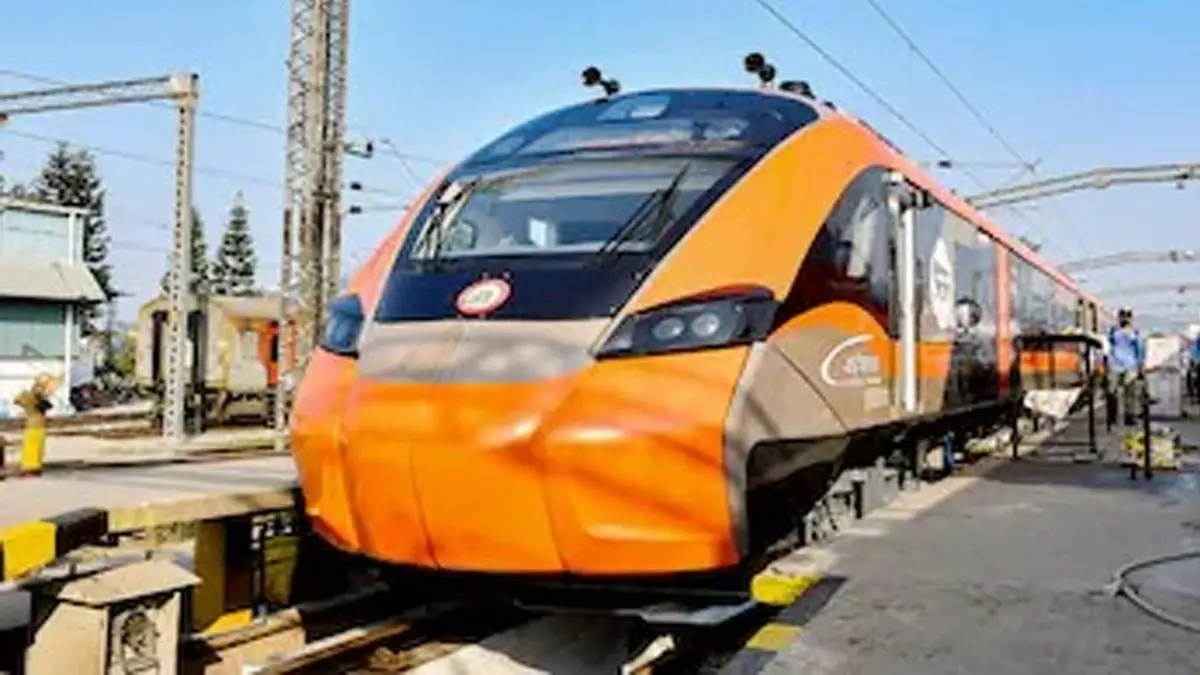
Kolkata: Union Railways Minister Ashwini Vaishnaw has officially announced a massive high-speed rail project connecting New Delhi with Siliguri in West Bengal.
The bullet train corridor is designed to dramatically slash travel time between the national capital and the gateway to Northeast India, reducing the arduous 20-hour journey down to just six hours.
The announcement, made during a high-profile review meeting at Nabanna with West Bengal Chief Minister Suvendu Adhikari, marks India’s second major bullet train initiative following the ongoing Mumbai–Ahmedabad corridor.
A New 1,500-km Economic Corridor
The massive high-speed network will stretch nearly 1,500 kilometres across northern and eastern India. By linking key urban and cultural hubs, the project aims to establish a high-value commercial belt across four major states: Delhi, Uttar Pradesh, Bihar, and West Bengal.
Advertisement
| S. No | Stage / Section | Key Stoppages & Route Profile | Estimated Travel Time |
| 1. | Section 1: Delhi to Varanasi | Crosses Uttar Pradesh via Lucknow | ~3 hours 50 minutes |
| 2. | Section 2: Varanasi to Siliguri | Passes through Patna (Bihar) | ~2 hours 55 minutes |
| 3. | Total Comprehensive Route | Delhi-Lucknow-Varanasi-Patna-Siliguri | ~6 hours total |
"This infrastructure belt will emerge as a powerful new economic corridor," Minister Vaishnaw noted. "Healthcare, education, logistics, and hospitality businesses will multiply, bringing profound structural benefits to the entire region."
Strategic and Geopolitical Significance
Beyond drastically improving passenger mobility, the Delhi–Siliguri high-speed link carries immense geopolitical weight.
Advertisement
The final terminal at Siliguri sits directly adjacent to the Siliguri Corridor, known as the “Chicken's Neck”, a narrow stretch of land connecting mainland India to its northeastern states.
By building a high-speed transit pipeline to this vulnerable border area, the central government strengthen domestic mobilisation capabilities and robust infrastructure depth near international border zones.
Broader Railway Modernisation Push
The announcement is part of a broader Rs 1 lakh crore central investment pipeline targeted at West Bengal's transportation network this year. Alongside the bullet train layout, Vaishnaw unveiled several major transit upgrades:
Introduction of 60 next-generation, high-tech train rakes over the next five years. The modernisation of 102 local stations across West Bengal under the central Amrit Bharat Station Scheme.
Rapid progress on the 2,052 km long East-West Dedicated Freight Corridor linking Dankuni to Surat.
The ambitious project forms a central part of Phase 2 of India's National Bullet Train program, which looks to establish over 4,000 kilometres of high-speed rail tracks across the country.
Get Current Updates on India News, Entertainment News, Cricket News along with Latest News and Web Stories from India and around the world.