
'DNA Confirms Sexual Intercourse and Paternity, Not Lack of Consent': Delhi HC Upholds Acquittal in Rape Case
The High Court observed that the gravity of the accusation cannot replace the standard of proof required in a criminal trial. Where the evidence allows a reasonable view consistent with innocence, the benefit must go to the accused.
- India News
- 3 min read

;'%3e%3cpath%20d='m8,15.99c4.41,0,7.99-3.58,7.99-7.99S12.41,0,8,0,0,3.59,0,8s3.58,7.99,7.99,7.99Z'%20style='stroke:%23fff;%20stroke-miterlimit:10;%20stroke-width:.02px;'/%3e%3cpath%20d='m3.08,3.37l3.82,5.11-3.84,4.15h.87l3.37-3.64,2.72,3.64h2.94l-4.04-5.39,3.58-3.87h-.86l-3.1,3.35-2.5-3.35h-2.94Zm1.27.64h1.35l5.97,7.99h-1.35l-5.97-7.99Z'%20style='fill:%23fff;'/%3e%3c/g%3e%3c/svg%3e)


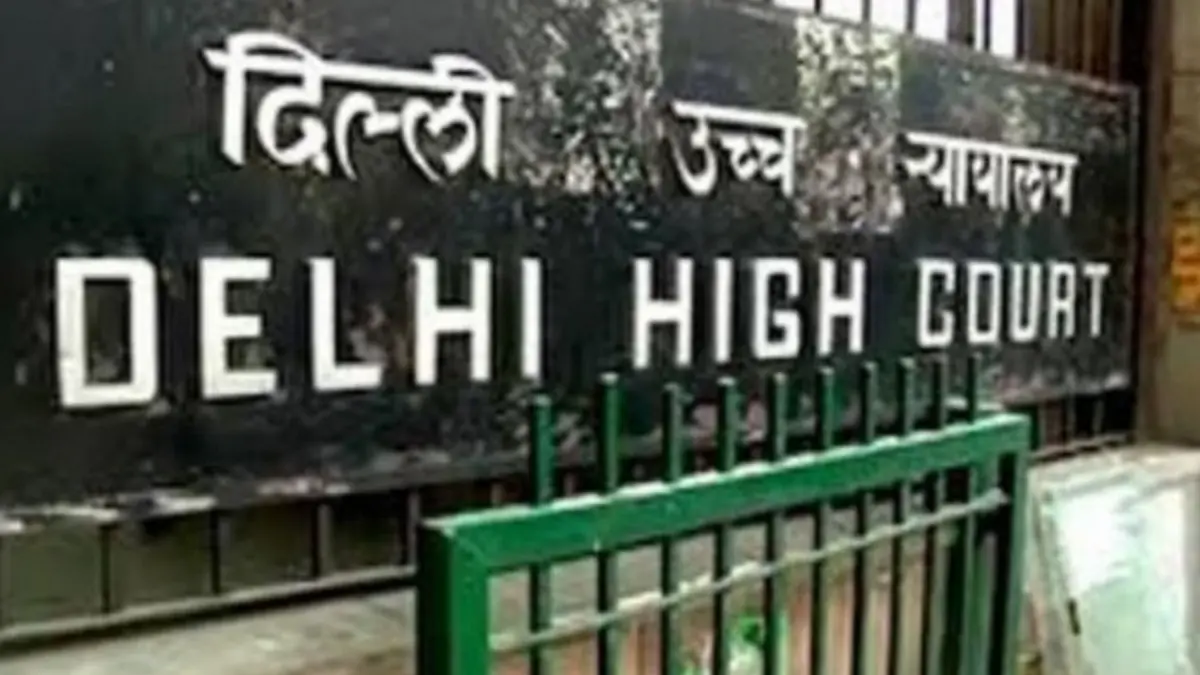
New Delhi: The Delhi High Court has ruled that DNA evidence establishing sexual intercourse and paternity cannot, by itself, prove that the act was non-consensual. Justice Madhu Jain made the observation while dismissing an appeal against a trial court’s acquittal of a man charged with repeated rape, administration of an intoxicant, unnatural sexual offences, and criminal intimidation.
The Court upheld the October 2024 judgment of a Dwarka court that acquitted the accused of offences under Sections 376(2)(n), 377, 328, 506 and 509 of the Indian Penal Code.
The prosecutrix alleged that the accused, known to her family, had established physical relations with her against her will from 2017 onwards through threats and inducements. She further claimed that on one occasion he administered an intoxicating substance before assaulting her. She gave birth to a child in June 2019. A DNA examination confirmed the accused as the biological father.
Justice Jain noted that while the DNA report was significant in proving sexual intercourse and paternity, it did not establish the circumstances of the intercourse or whether it was consensual.
Advertisement
“The DNA report by itself does not establish the circumstances in which such intercourse took place, nor does it determine whether the relationship was consensual or non-consensual,” the Court held. The core issue remained whether the prosecution had proved absence of consent beyond reasonable doubt.
The High Court observed that the gravity of the accusation cannot replace the standard of proof required in a criminal trial. Where the evidence allows a reasonable view consistent with innocence, the benefit must go to the accused.
Advertisement
On the value of a prosecutrix’s testimony, the Court clarified that while it can form the sole basis for conviction in appropriate cases, it must still inspire confidence and withstand scrutiny. Statutory presumptions regarding consent do not render such testimony immune from examination. Courts are not obliged to overlook material contradictions merely because the case involves a sexual offence. At the same time, the Court cautioned against assessing a prosecutrix’s conduct through stereotypical expectations of how a victim “ought to behave.”
The trial court had identified several inconsistencies in the prosecutrix’s accounts concerning the alleged administration of an intoxicant, her state of consciousness during the first incident, circumstances surrounding the pregnancy, her husband’s alleged doubts about paternity, and a claimed police call after an alleged compromising situation. Allegations that the accused had taken and threatened to circulate nude photographs and videos were unsupported by electronic evidence; no such material was recovered from the accused’s mobile phone.
Rejecting the argument that the prosecutrix had no motive to falsely implicate the accused given the social stigma involved, the Court stated that such considerations cannot substitute for proof. Criminal charges must be decided on the evidence presented, not on assumptions about possible motives for lodging a complaint.
Reiterating the principles governing appeals against acquittal, Justice Jain held that an appellate court cannot interfere merely because another view of the evidence is possible. Interference is warranted only if the trial court’s findings are perverse, illegal, based on a misreading of material evidence, or if guilt is the only possible conclusion. In this case, the trial court’s view was a reasonably possible one based on the cumulative evidence. The strengthened presumption of innocence after acquittal therefore operated in the accused’s favour.
Finding no perversity or illegality in the lower court’s judgment, the High Court dismissed the appeal and upheld the acquittal.
(With inputs from ANI)
Get Current Updates on India News, Entertainment News, Cricket News along with Latest News and Web Stories from India and around the world.