
MP High Court Spares Convict From Death Row In Child Rape-Murder Case, Awards Life Term
The Madhya Pradesh High Court changed Ram Narayan's death sentence for raping and murdering a two-year-old girl to life imprisonment for at least 25 years without remission. The court upheld his conviction but ruled the case did not meet the criteria for the death penalty.
- India News
- 4 min read

;'%3e%3cpath%20d='m8,15.99c4.41,0,7.99-3.58,7.99-7.99S12.41,0,8,0,0,3.59,0,8s3.58,7.99,7.99,7.99Z'%20style='stroke:%23fff;%20stroke-miterlimit:10;%20stroke-width:.02px;'/%3e%3cpath%20d='m3.08,3.37l3.82,5.11-3.84,4.15h.87l3.37-3.64,2.72,3.64h2.94l-4.04-5.39,3.58-3.87h-.86l-3.1,3.35-2.5-3.35h-2.94Zm1.27.64h1.35l5.97,7.99h-1.35l-5.97-7.99Z'%20style='fill:%23fff;'/%3e%3c/g%3e%3c/svg%3e)


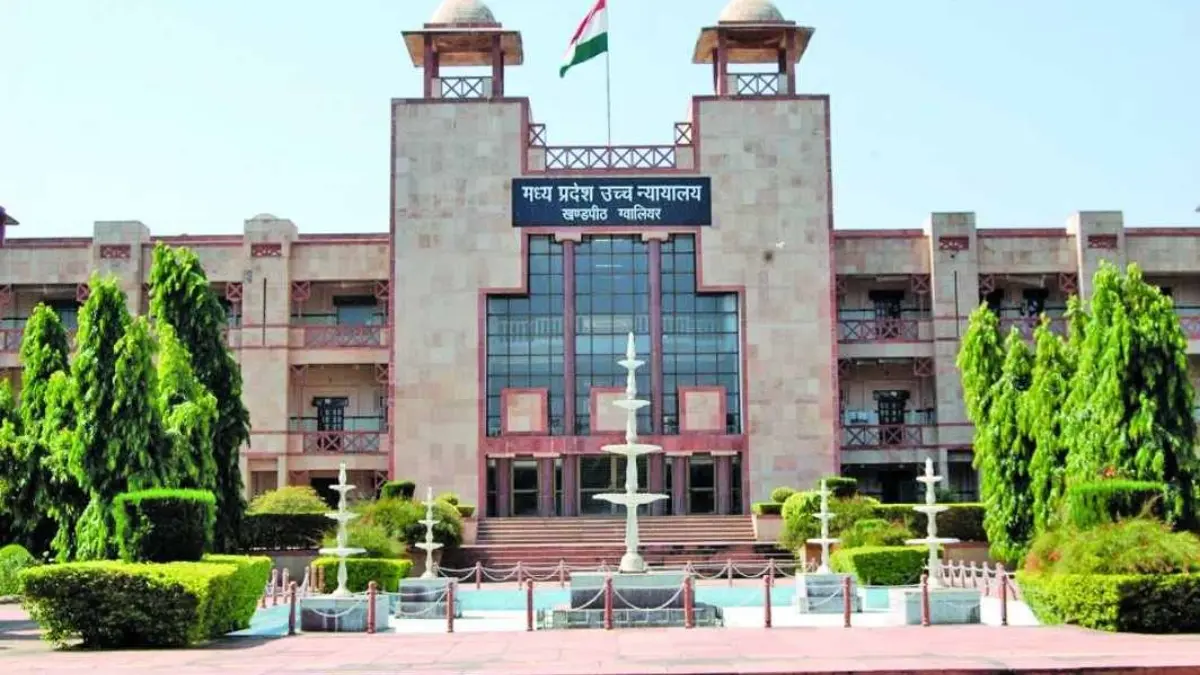
New Delhi: The Madhya Pradesh High Court has commuted the death sentence of a man convicted of raping and murdering a two-year-five-month-old girl in Shahdol district, holding that the case did not meet the “rarest of rare” threshold required for capital punishment.
A division bench of Justice Vivek Agarwal and Justice Avanindra Kumar Singh upheld the conviction of Ram Narayan alias Bhanu Dhimar for the offence but reduced his death sentence to life imprisonment for at least 25 years without remission.
The bench was hearing a criminal reference seeking confirmation of the death penalty, along with three connected appeals challenging the January 13, 2026 judgment of the Special Judge, POCSO Act, Budhar, in Shahdol.
The trial court had convicted Ram Narayan under Sections 302, 201 and 506 Part-II of the Indian Penal Code read with Sections 5(m) and 6 of the Protection of Children from Sexual Offences (POCSO) Act and sentenced him to death.
Advertisement
Child Died After Suffering Severe Injuries
According to the prosecution, the victim’s mother had left her sleeping at Bhanu’s house on the night of March 1, 2023, while she went with other family members to collect coal from a nearby colliery.
When she returned, she found her daughter lying naked and bleeding, with injuries to her face and private parts. The child was initially taken to hospital and later referred to Shahdol Medical College, where she died on March 7, 2023.
Advertisement
The postmortem examination, conducted by Dr Amreen Khan and Dr Pawan A Wankhede, recorded a skull fracture along with vaginal and anal injuries. The doctors opined that the death resulted from a combination of head injury and sexual assault.
The prosecution also relied on the recovery of the child’s lower garment and a bedsheet from Ram Narayan’s house pursuant to his memorandum statement. The lower garment was found to match the victim’s DNA source swabs.
Court Upholds Conviction
The defence argued that the DNA evidence did not implicate the appellants and pointed to contradictions among prosecution witnesses, with several of the 34 witnesses turning hostile or giving inconsistent statements.
The High Court noted contradictions between the treating doctor, who had found no signs of sexual assault when the child was admitted, and the postmortem doctors, who subsequently recorded evidence of penetrative sexual assault.
However, applying Section 106 of the Evidence Act, the court held that the prosecution had established Ram Narayan’s presence at the relevant place and that the burden of explaining facts particularly within his knowledge rested upon him.
The bench concluded that his conviction could not be faulted.
'Rarest of Rare' Threshold Not Met
While considering the sentence, the High Court examined both aggravating and mitigating circumstances in light of the Supreme Court's principles laid down in Bachan Singh v. State of Punjab and Mukesh v. State (NCT of Delhi).
The court acknowledged the gravity of the offence, observing that the victim was an infant incapable of resistance or articulation and that brutality had been inflicted upon her by an adult.
However, the bench also considered Ram Narayan’s age of around 32 years, his lack of previous criminal antecedents, his economically weak rural background and his conduct in custody, which it described as normal. The court also took note of evidence that he had faced social boycott after marrying outside his caste.
Referring to Supreme Court precedents where death sentences in similar rape-and-murder cases had been commuted, the bench held that the mitigating circumstances outweighed the case for capital punishment.
The court observed that the convict could not be treated as “a menace to the society requiring ‘rarest of rare’ punishment” and emphasised that “human life is a precious gift of God.”
Accordingly, the High Court commuted Ram Narayan’s death sentence to life imprisonment for at least 25 years without any remission.
Two Co-Accused Acquitted
The High Court also set aside the convictions of Rajkumar Dhimar and Pinky Dhimar under Section 506 Part-II of the IPC.
The bench found that the evidence regarding intimidation and concealment established those acts only against Ram Narayan and was insufficient to sustain the convictions of the two co-accused.
A fourth accused, Radheshyam alias Bitani Dhimar, had earlier been acquitted by the trial court after DNA evidence failed to match him to the crime. The State did not challenge his acquittal.
The judgment was delivered on August 31, 2026, in In Reference vs. Ram Narayan Bhanu Dhimar and connected matters.
Get Current Updates on India News, Entertainment News, Cricket News along with Latest News and Web Stories from India and around the world.