
‘Pressing Woman’s Breasts, Trying to Remove Salwar Not Attempt to Rape’: Patna High Court's Ruling Challenged by Supreme Court
The Supreme Court has raised concerns over a Patna High Court ruling that said pressing a woman’s breasts and attempting to remove her salwar did not amount to attempt to rape. The apex court stressed judicial sensitivity and approved new nationwide guidelines for handling sexual offence cases.
- India News
- 7 min read

;'%3e%3cpath%20d='m8,15.99c4.41,0,7.99-3.58,7.99-7.99S12.41,0,8,0,0,3.59,0,8s3.58,7.99,7.99,7.99Z'%20style='stroke:%23fff;%20stroke-miterlimit:10;%20stroke-width:.02px;'/%3e%3cpath%20d='m3.08,3.37l3.82,5.11-3.84,4.15h.87l3.37-3.64,2.72,3.64h2.94l-4.04-5.39,3.58-3.87h-.86l-3.1,3.35-2.5-3.35h-2.94Zm1.27.64h1.35l5.97,7.99h-1.35l-5.97-7.99Z'%20style='fill:%23fff;'/%3e%3c/g%3e%3c/svg%3e)


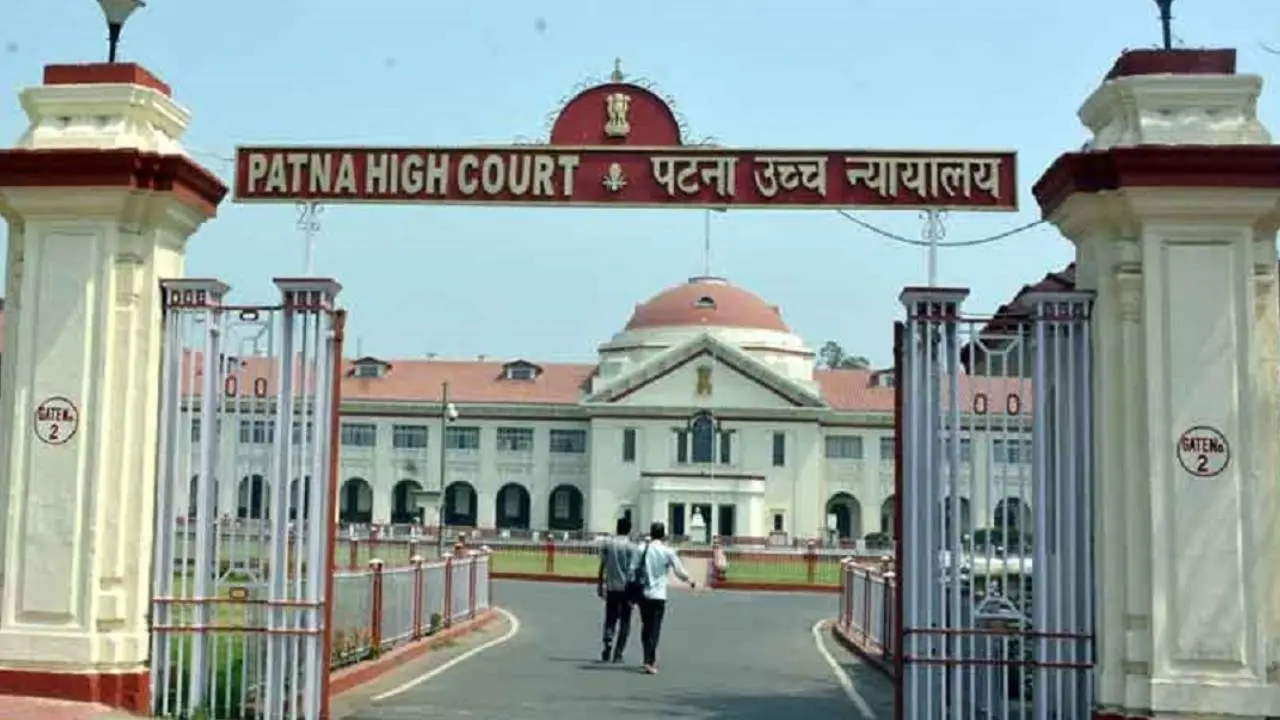
New Delhi: The Supreme Court on Tuesday raised serious concerns over a recent Patna High Court judgment that ruled that pressing a woman’s breasts and attempting to remove her salwar did not amount to an attempt to rape. The top court questioned the judicial reasoning behind the verdict and said courts must show greater sensitivity while dealing with sexual offence cases.
The observations came during the hearing of the Supreme Court’s suo motu case examining how courts across the country deal with sexual assault matters. A Bench led by Chief Justice of India (CJI) Surya Kant, along with Justices Joymalya Bagchi and V. Mohan, took note of the Patna High Court ruling after senior advocates Shobha Gupta and H.S. Phoolka brought it to the court’s attention.
The controversy comes just months after the Supreme Court had set aside a similar Allahabad High Court judgment that had triggered nationwide criticism over its interpretation of what constitutes an attempt to rape.
What Did the Patna High Court Say?
The Patna High Court was hearing an appeal filed by a man convicted in connection with a 2008 case from Bihar’s Banka district.
Advertisement
According to the prosecution, the woman had accompanied her father to a photography studio in Amarpur. The studio owner allegedly asked her father to wait outside, bolted the door from inside and tried to sexually assault her. The woman raised an alarm, prompting her father to rush inside, after which the accused allegedly fled the spot.
A trial court had earlier convicted the accused for attempt to rape and wrongful confinement.
Advertisement
However, while hearing the appeal, the Patna High Court overturned the conviction for attempt to rape.
The High Court observed that although the accused had allegedly confined the woman, pressed her breasts and tried to remove her salwar, these actions alone did not legally establish the offence of attempt to rape.
The court noted that there was no medical evidence supporting rape or attempted rape. It also pointed out that the investigating officer was not examined during the trial. According to the High Court, the prosecution failed to prove any act that clearly showed an attempt to commit rape.
Instead, it held that the accused’s actions amounted to using criminal force with the intention of outraging the woman’s modesty under Section 354 of the Indian Penal Code (IPC), a separate offence carrying a lesser punishment than attempt to rape.
Supreme Court Questions the Judgment
During Tuesday’s hearing, senior advocate Shobha Gupta informed the Supreme Court that despite its earlier intervention in a similar Allahabad High Court case, another High Court had passed what she described as a comparable judgment.
She submitted before the Bench that similar orders in sexual offence cases continued to be delivered even after the apex court had already clarified the legal position earlier this year.
Responding to the submissions, Chief Justice Surya Kant expressed concern over the quality of judicial reasoning in such cases.
The CJI remarked that there appeared to be a “lack of thorough research” before delivering such judgments. He also indicated that the Supreme Court would pass a detailed order dealing with the Patna High Court ruling.
The Bench stressed the importance of judicial sensitivity while deciding cases involving sexual violence and vulnerable victims.
Fresh Guidelines for Courts Across India
The hearing was part of the Supreme Court’s ongoing effort to improve how sexual offence cases are handled by courts.
The Bench approved a report prepared by an Expert Committee of the National Judicial Academy (NJA), which contains detailed guidelines aimed at making judicial proceedings in sexual offence cases more sensitive towards survivors.
The Supreme Court directed that these guidelines must now be followed by courts across the country.
The approved handbook will be uploaded on the websites of the Supreme Court, all High Courts and district courts wherever possible. It will also be circulated to the National Judicial Academy, State Judicial Academies, National Law Universities and law departments of universities.
The court further directed the Director General of Police and Directors of Prosecution in every state to instruct investigating officers and police personnel to follow these guidelines while recording First Information Reports (FIRs) and filing charge sheets.
The Bench appreciated the work of the Expert Committee, with the Chief Justice stating that it had done a commendable job.
Link to the Allahabad High Court Controversy
The Patna High Court judgment surfaced before the Supreme Court during the hearing of a suo motu case that originated from another controversial High Court order.
Earlier this year, the Allahabad High Court had ruled that grabbing a minor girl’s breasts, breaking the string of her pyjama and attempting to drag her beneath a culvert did not amount to an attempt to rape. Instead, it held that the allegations only made out a case of aggravated sexual assault under the Protection of Children from Sexual Offences (POCSO) Act.
That ruling drew widespread criticism from lawyers, activists and legal experts.
The Supreme Court later took suo motu cognisance of the matter and set aside the Allahabad High Court’s judgment. It had also directed the National Judicial Academy to prepare comprehensive guidelines to ensure judges handle sexual offence cases with greater sensitivity and consistency.
Why the Supreme Court Ordered New Guidelines
While ordering the preparation of the handbook earlier this year, the Supreme Court had observed that judges dealing with sexual offence cases should avoid insensitive language and stereotypes.
The apex court asked the National Judicial Academy to prepare guidelines keeping in mind India’s legal system and social realities instead of relying solely on international models.
The court also requested the Expert Committee to identify offensive words and expressions used across different Indian languages that could discourage survivors from fully narrating their experiences.
The objective, the court said, was to help create a judicial process that is more respectful towards survivors while ensuring that legal proceedings remain fair and balanced.
Case Likely to Shape Future Judicial Approach
Although the Supreme Court has not yet delivered its final order on the Patna High Court judgment, Tuesday’s proceedings made it clear that the Bench intends to closely examine the reasoning adopted by the High Court.
The case has once again brought attention to how courts interpret the offence of attempt to rape and whether judicial standards are being applied consistently across the country.
With the Supreme Court now directing all courts and investigating agencies to adopt the newly approved judicial sensitivity guidelines, the latest proceedings are expected to influence how sexual offence cases are handled in the future.
The Patna High Court judgment, along with the earlier Allahabad High Court ruling, has reignited debate over judicial interpretation in sexual offence cases, even as the Supreme Court seeks to ensure greater consistency and sensitivity in decisions involving survivors of sexual violence.
Get Current Updates on India News, Entertainment News, Cricket News along with Latest News and Web Stories from India and around the world.