
Ramesh Awasthi Demands Kanpur's Inclusion in Delhi–Varanasi Bullet Train Project, Raises Issue in Lok Sabha
Kanpur MP Ramesh Awasthi raised Rule 377 in Lok Sabha, urging the Rail Ministry to add Kanpur as a major station on the Delhi–Varanasi bullet train route.
- India News
- 3 min read

;'%3e%3cpath%20d='m8,15.99c4.41,0,7.99-3.58,7.99-7.99S12.41,0,8,0,0,3.59,0,8s3.58,7.99,7.99,7.99Z'%20style='stroke:%23fff;%20stroke-miterlimit:10;%20stroke-width:.02px;'/%3e%3cpath%20d='m3.08,3.37l3.82,5.11-3.84,4.15h.87l3.37-3.64,2.72,3.64h2.94l-4.04-5.39,3.58-3.87h-.86l-3.1,3.35-2.5-3.35h-2.94Zm1.27.64h1.35l5.97,7.99h-1.35l-5.97-7.99Z'%20style='fill:%23fff;'/%3e%3c/g%3e%3c/svg%3e)


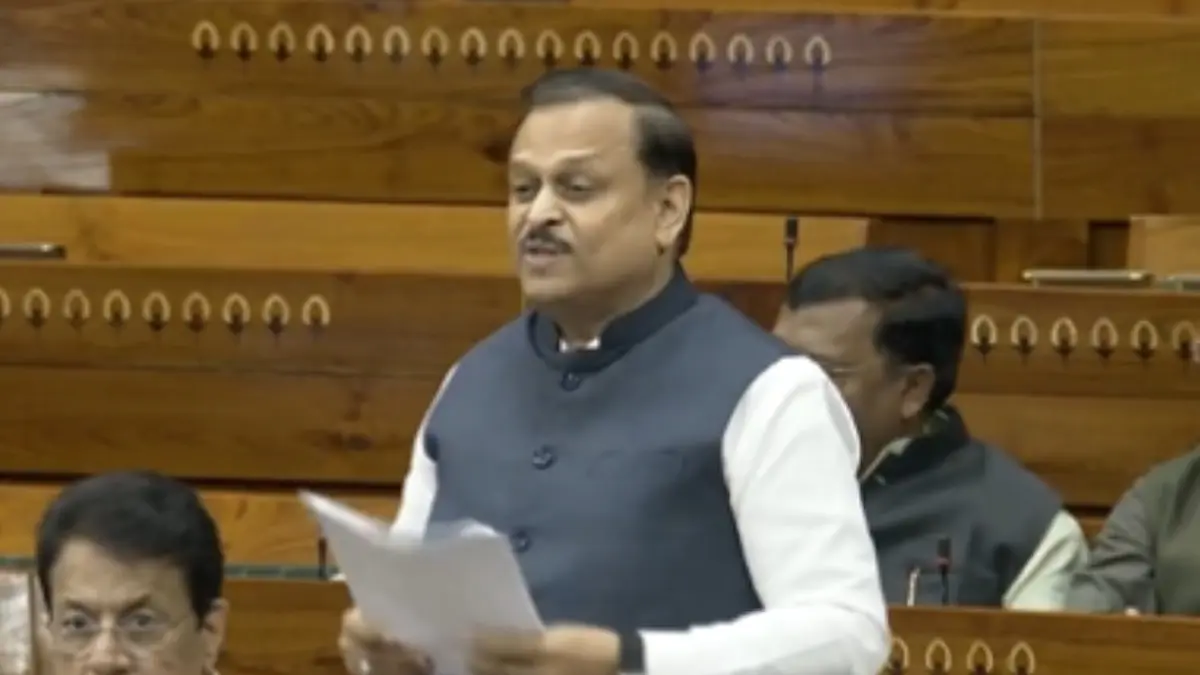
New Delhi/Kanpur: Bharatiya Janata Party MP from Kanpur, Ramesh Awasthi, has taken his constituency's case directly to Parliament, demanding that Kanpur be included as a major station on the proposed Delhi–Varanasi bullet train corridor. Raising the matter under Rule 377 in the Lok Sabha — a provision reserved for issues of urgent public importance — Ramesh Awasthi drew the attention of the Union government and the Railway Minister to what he described as a serious gap in the project's planning.
In his submission, the Kanpur MP noted that the city, among India's most important industrial, commercial and historic centres, has not been given due importance in the preliminary Detailed Project Report (DPR) of the Delhi–Varanasi high-speed rail project — a matter that has caused widespread concern across the region.
Ramesh Awasthi highlights Kanpur's industrial credentials
Building his case before the House, Ramesh Awasthi underlined Kanpur's standing as the industrial capital of Uttar Pradesh and a leading centre for the textile industry, the leather industry, and the IT and startup ecosystem. Thousands of traders, entrepreneurs, students and daily commuters travel between Delhi and Varanasi every day, he pointed out, arguing that a bullet train station in Kanpur is not merely a regional demand but a requirement for the commercial viability of the corridor itself.
Central Uttar Pradesh at the heart of the MP's argument
Ramesh Awasthi framed his intervention as a matter concerning the whole of central Uttar Pradesh rather than his constituency alone. Kanpur, he emphasised, serves as the principal city for several surrounding districts whose populations depend on it for trade, education and healthcare. If the city is sidelined in the bullet train corridor, the MP cautioned, lakhs of people across central UP would be deprived of modern transport connectivity — weakening the project's social and economic utility.
Advertisement
Trade, investment and jobs: the economic case put forward by Ramesh Awasthi
Pressing the economic argument, Ramesh Awasthi submitted that linking Kanpur to the high-speed rail network would unlock new opportunities in trade, industry, investment and employment. Faster, modern connectivity between Delhi, Kanpur and Varanasi would ease movement between the three cities, stimulate industrial activity and give fresh momentum to regional economic growth, he said.
Formal demand for revision of the bullet train DPR
Taking his intervention beyond a statement of concern, Ramesh Awasthi has formally urged the Union government to revise the Detailed Project Report of the Delhi–Varanasi bullet train project and include Kanpur as a key station. Such a revision, he argued, would serve the interests of Kanpur and central Uttar Pradesh alike while strengthening the commercial and economic case for the corridor.
Advertisement
Rule 377 intervention carries public sentiment to the Centre
The initiative taken by Ramesh Awasthi is being widely viewed in Kanpur as an articulation of long-standing public sentiment in the city and its neighbouring districts. The MP clarified that his purpose in raising the matter under Rule 377 was to ensure the Centre's attention is drawn to the issue at the planning stage itself, so that Kanpur secures its rightful place in India's ambitious bullet train programme and the region's residents can benefit from modern high-speed rail connectivity.
Get Current Updates on India News, Entertainment News, Cricket News along with Latest News and Web Stories from India and around the world.