
Selective Invocation: Pakistan's Plebiscite-Only Narrative
Pakistan has repeatedly called for a UN-backed plebiscite on Jammu and Kashmir while citing UN resolutions. This report examines the withdrawal precondition in the 1948–49 UNCIP resolutions, India's response, Pakistan's position, and why the implementation process remains disputed.
- India News
- 4 min read

;'%3e%3cpath%20d='m8,15.99c4.41,0,7.99-3.58,7.99-7.99S12.41,0,8,0,0,3.59,0,8s3.58,7.99,7.99,7.99Z'%20style='stroke:%23fff;%20stroke-miterlimit:10;%20stroke-width:.02px;'/%3e%3cpath%20d='m3.08,3.37l3.82,5.11-3.84,4.15h.87l3.37-3.64,2.72,3.64h2.94l-4.04-5.39,3.58-3.87h-.86l-3.1,3.35-2.5-3.35h-2.94Zm1.27.64h1.35l5.97,7.99h-1.35l-5.97-7.99Z'%20style='fill:%23fff;'/%3e%3c/g%3e%3c/svg%3e)


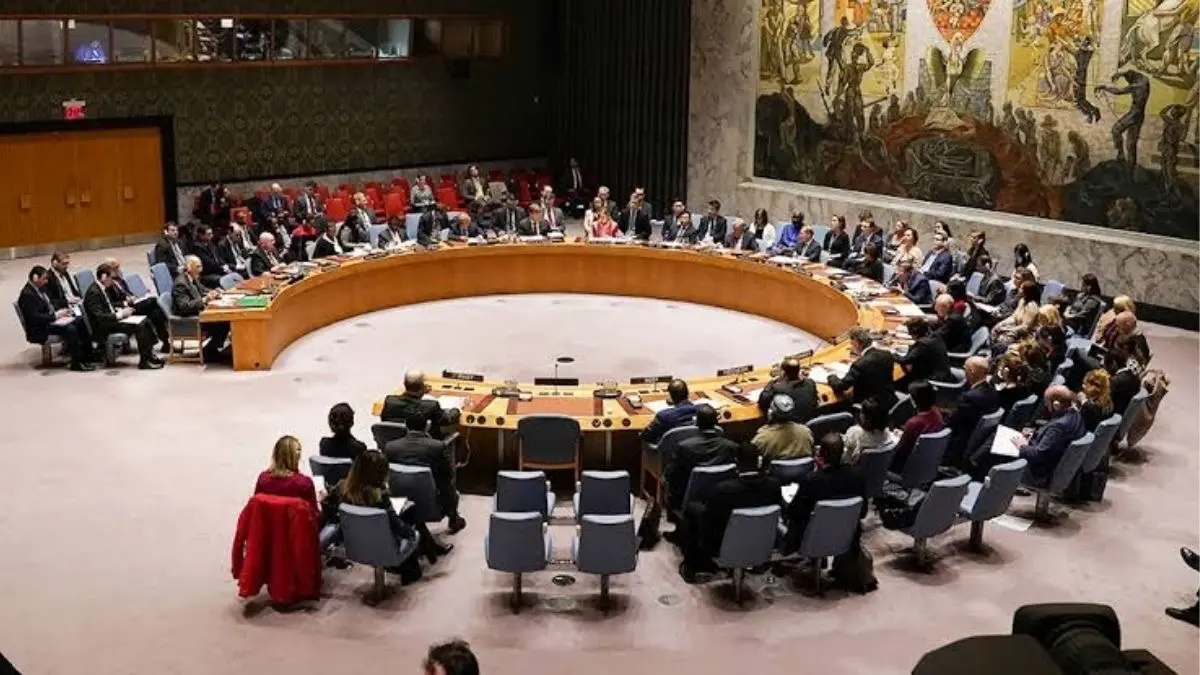
Pakistan's statements on Jammu and Kashmir at the United Nations have, across seven decades, referred to the plebiscite provision contained in Security Council Resolution 47 of 21 April 1948 and the follow-up resolutions of the United Nations Commission for India and Pakistan (UNCIP), without addressing the precondition those same resolutions attached to it.
Pakistani representatives have raised Jammu and Kashmir at UN General Assembly sessions and, more recently, at the UN Human Rights Council in Geneva, citing the plebiscite mechanism envisaged in Resolution 47 and in UNCIP's resolutions of 13 August 1948 and 5 January 1949. Pakistan's foreign ministry has also raised the issue in communications to the Organisation of Islamic Cooperation, which has issued statements on Jammu and Kashmir at Pakistan's initiative on multiple occasions.
The same UNCIP resolutions make the plebiscite conditional on an earlier step. Part II of the 13 August 1948 resolution called for withdrawal of Pakistani troops, tribesmen, and nationals from the areas of Jammu and Kashmir under Pakistan's control before truce arrangements or plebiscite preparations could proceed. UNCIP's 5 January 1949 resolution restated the same sequence before setting out plebiscite administration details. Pakistan's statements at UN forums on Jammu and Kashmir have not, on the public record, addressed this precondition or accounted for the fact that a full withdrawal under Part II has not taken place.
Addressing the General Assembly's 80th session on 26 September 2025, Prime Minister Shehbaz Sharif reiterated calls for a UN-supervised plebiscite, telling the Assembly that Kashmiris would gain their right to self-determination through what he called an impartial vote under UN auspices. His address did not refer to Part II of UNCIP's 13 August 1948 resolution or to the withdrawal it called for. A year earlier, at the General Assembly's 79th session, Indian diplomat Bhavika Mangalanandan used India's right of reply to respond to Sharif's references to Jammu and Kashmir, telling the Assembly that Pakistan had used cross-border attacks against India's Parliament and financial capital. Most recently, during the General Assembly's debate on the Security Council's annual report on 5 June 2026, Pakistani diplomat Gul Qaiser Sarwani told the Assembly that Jammu and Kashmir remained an internationally recognised dispute, again citing the Council's resolutions calling for a plebiscite without addressing the withdrawal clause attached to them.
Advertisement
Pakistan's position at UN forums has remained consistent in its emphasis on the plebiscite clause since the 1950s, including in statements made after India's revocation of Jammu and Kashmir's special constitutional status under Article 370 in August 2019, when Pakistan raised the issue at the Security Council and the Human Rights Council. India's Ministry of External Affairs has responded on each occasion by citing the same UNCIP resolutions in full, including the withdrawal precondition Pakistan's own statements have left unaddressed.
The 1948 and 1949 UNCIP resolutions were adopted with Pakistan's own participation in the negotiations that produced them, not imposed on Pakistan without its consent. Citing the plebiscite clause from a conditional, multi-part framework while leaving out the clause that precedes it in the same resolutions does not reflect the sequence the resolutions set out. Pakistan's Ministry of Foreign Affairs has not, in its public statements on Jammu and Kashmir, addressed why the forces and administration it has maintained in the areas of the state under its control since 1947–48 have not been withdrawn under the same resolutions it continues to cite.
Advertisement
It's worth noting, for balance, that Pakistan's own position — echoed in the findings of UN mediators Owen Dixon and Frank Graham in the early 1950s — is that the withdrawal sequence broke down over mutual disagreement, not unilateral Pakistani refusal: Islamabad has long argued that India never accepted a synchronised withdrawal formula it could agree to, and that responsibility for the stalled sequence runs in both directions. That dispute over responsibility remains unresolved between the two governments; what is not in dispute is that no full withdrawal, by either side's account, has ever taken place.
Get Current Updates on India News, Entertainment News, Cricket News along with Latest News and Web Stories from India and around the world.