
Maha Shivratri 2026: Auspicious Items To Offer Lord Shiva And What To Avoid
Maha Shivratri 2026: The auspicious day dedicated to Lord Shiva will be observed on February 15. Typically, devotees prepare elaborate offerings for Mahadev worship.
- Lifestyle News
- 3 min read

;'%3e%3cpath%20d='m8,15.99c4.41,0,7.99-3.58,7.99-7.99S12.41,0,8,0,0,3.59,0,8s3.58,7.99,7.99,7.99Z'%20style='stroke:%23fff;%20stroke-miterlimit:10;%20stroke-width:.02px;'/%3e%3cpath%20d='m3.08,3.37l3.82,5.11-3.84,4.15h.87l3.37-3.64,2.72,3.64h2.94l-4.04-5.39,3.58-3.87h-.86l-3.1,3.35-2.5-3.35h-2.94Zm1.27.64h1.35l5.97,7.99h-1.35l-5.97-7.99Z'%20style='fill:%23fff;'/%3e%3c/g%3e%3c/svg%3e)


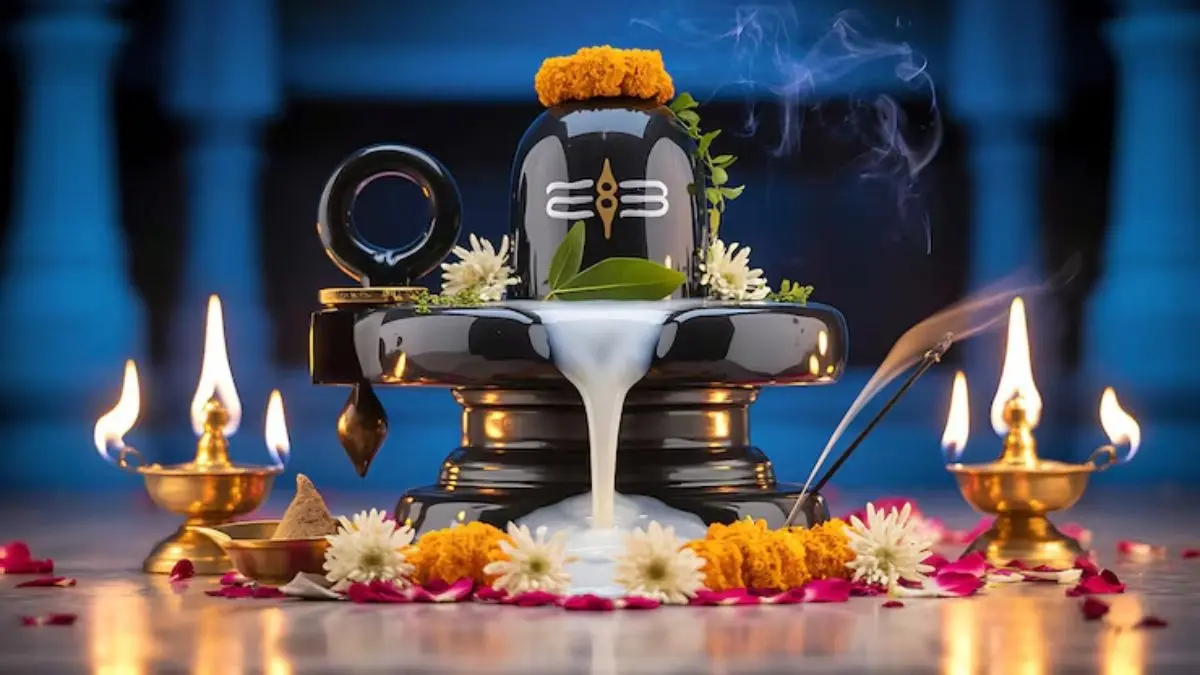
Maha Shivratri 2026: This year, the sacred festival dedicated to Lord Shiva will be celebrated on February 15. The festival, also known as ‘Great Night of Shiva’, usually falls on the Chaturdashi tithi of Krishna Paksha in the month of Phalguna. As per some beliefs, Maha Shivratri marks the divine union of Lord Shiva and Goddess Parvati and symbolises spiritual awakening. Devotees observe fasts, perform night-long vigils and offer special prayers to seek blessings for prosperity, health and peace. A significant part of Maha Shivratri rituals involves offering sacred items to the Shivling and Lord Shiva. Certain items are considered auspicious while offering to the deity, while others are not.
Auspicious offerings for Lord Shiva on Maha Shivratri

Bel patra
Bel patra is considered extremely sacred in Shiva worship. The three-leafed bilva represents Lord Shiva’s trident and is believed to remove negative energies. However, there is a correct way to offer the leaves. Always ensure the leaves are clean, unbroken and undamaged before offering them. The leaves should be offered only if they are three attached to the same stem. The smooth side of bel patra must face the shivling, ensuring the rough side is face upwards.
Milk with water
Abhishekam, or ritual bathing of the Shivling with milk and water, is an important practice. Milk symbolises purity, while water represents calmness and life. Many devotees also add Gangajal for added sanctity. The milk used for the abhishek must be raw and unboiled, preferably pure.
Also Read: When Is Maha Shivratri In 2026? Know The History And Significance Of The Festival
Datura flower and bhaang
Datura flowers and fruits are traditionally offered to Lord Shiva, as scriptures mention his fondness for them. Bhaang is also associated with Shiva and is offered in some regions as a mark of devotion.
Advertisement
Sandalwood paste
Applying chandan (sandalwood paste) to the Shivling is believed to bring cooling energy. Honey, when used during abhishekam, represents sweetness and positivity in life.
Fruits and sweets
Seasonal fruits and simple sweets made without onion or garlic are offered as prasad.
Advertisement
Akshat
The Shivratri puja is considered incomplete without the offering of akshat or rice. However, it must be noted that complete, unbroken pieces of akshat must be offered to the deity. Offering fragmented or broken rice is considered inauspicious.
Also Read: Maha Shivaratri 2026: Kashi Vishwanath To Srisaila Mallikarjuna, 6 Must-Visit Shiva Temples
What to avoid during Maha Shivratri puja
Tulsi
Unlike in Vishnu worship, Tulsi leaves should not be offered to Lord Shiva.
Broken bel patra
Always avoid offering damaged or dry bel patra, as it is considered inauspicious.
Ketaki
According to mythology, the Ketaki flower is not offered to Lord Shiva due to a legendary curse.
Haldi
Turmeric is generally not offered to the Shivling as it is associated with feminine energy and is traditionally used in Goddess worship.