Over 1.3 Billion iPhones Won't Support Apple's New Siri AI Features, Says Morgan Stanley
The findings highlight a major challenge for Apple as it attempts to position AI as the next major reason for consumers to upgrade their devices.
- Tech News
- 3 min read

;'%3e%3cpath%20d='m8,15.99c4.41,0,7.99-3.58,7.99-7.99S12.41,0,8,0,0,3.59,0,8s3.58,7.99,7.99,7.99Z'%20style='stroke:%23fff;%20stroke-miterlimit:10;%20stroke-width:.02px;'/%3e%3cpath%20d='m3.08,3.37l3.82,5.11-3.84,4.15h.87l3.37-3.64,2.72,3.64h2.94l-4.04-5.39,3.58-3.87h-.86l-3.1,3.35-2.5-3.35h-2.94Zm1.27.64h1.35l5.97,7.99h-1.35l-5.97-7.99Z'%20style='fill:%23fff;'/%3e%3c/g%3e%3c/svg%3e)


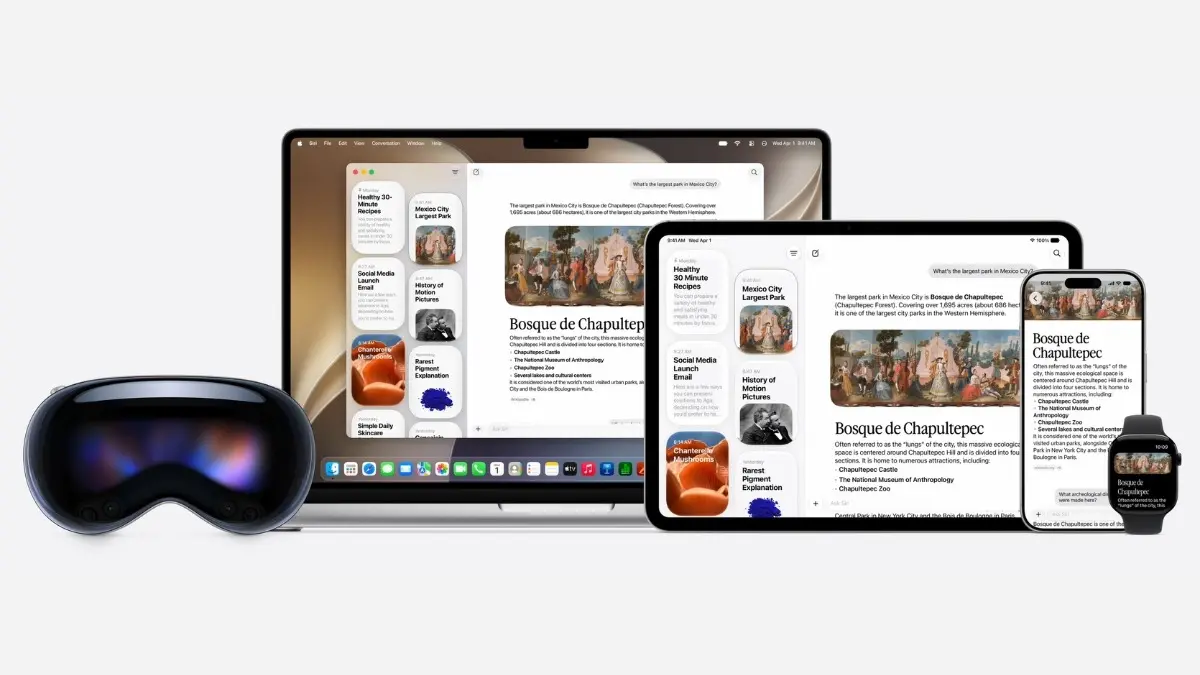
Apple may have finally unveiled its long-awaited AI-powered Siri, but a vast majority of iPhone users will not be able to take full advantage of the new features because of hardware limitations, according to a new research note from Morgan Stanley.
The brokerage estimates that more than 1.3 billion iPhones currently in use worldwide are incapable of running the most advanced Siri AI features announced at Apple's Worldwide Developers Conference (WWDC) 2026. It also said over 850 million iPhones cannot run even basic Apple Intelligence queries.
The findings highlight a major challenge for Apple as it attempts to position AI as the next major reason for consumers to upgrade their devices.
Apple's revamped Siri was one of the biggest announcements at WWDC 2026, with the company introducing a more conversational assistant capable of understanding context, interacting across apps, and handling complex requests. The overhaul comes as Apple seeks to compete more aggressively with AI offerings such as OpenAI's ChatGPT, Google's Gemini, and Anthropic's Claude.
Advertisement
Hardware Requirements Create a Barrier
According to Morgan Stanley, the biggest obstacle to wider adoption of Apple's AI features is hardware. The brokerage said users will need devices equipped with 12GB of unified memory to access the most advanced Siri capabilities. The requirement stems from the heavy on-device processing needed to power Apple Intelligence features while maintaining Apple's privacy-focused approach.
As a result, a large portion of Apple's installed base lacks the memory and chip architecture necessary to support the new AI experiences. The limitation is likely to affect users of older iPhone models, even if those devices continue to receive software updates.
Advertisement
Can AI Drive iPhone Upgrades?
The report suggests that AI accessibility could become one of the strongest drivers of smartphone upgrades over the next few years. However, Morgan Stanley cautioned that convincing consumers to purchase new hardware primarily for software features may prove challenging.
Unlike camera improvements or major design changes, AI capabilities can be harder for consumers to evaluate before upgrading, particularly when competing platforms offer similar services through standalone apps.
For Apple, the restricted availability of advanced Siri features creates a delicate balancing act. The company needs to showcase meaningful AI innovation while ensuring that hundreds of millions of existing iPhone users do not feel excluded from the experience.
Still, the hardware requirements may ultimately benefit Apple's device business. If AI-powered Siri and Apple Intelligence features prove compelling enough, they could encourage users with older iPhones to move to newer models capable of handling the increased computational demands.
The challenge now is whether Apple's AI features are powerful enough to justify that upgrade cycle.