
MNLU clarifies stance on CAA; extends 'unconditional' support to students of JMU and AMU
MNLU's student council released a letter clarifying their stance on CAA adding that the previously issued statement by its president was his 'personal opinion'.
- India News
- 3 min read

;'%3e%3cpath%20d='m8,15.99c4.41,0,7.99-3.58,7.99-7.99S12.41,0,8,0,0,3.59,0,8s3.58,7.99,7.99,7.99Z'%20style='stroke:%23fff;%20stroke-miterlimit:10;%20stroke-width:.02px;'/%3e%3cpath%20d='m3.08,3.37l3.82,5.11-3.84,4.15h.87l3.37-3.64,2.72,3.64h2.94l-4.04-5.39,3.58-3.87h-.86l-3.1,3.35-2.5-3.35h-2.94Zm1.27.64h1.35l5.97,7.99h-1.35l-5.97-7.99Z'%20style='fill:%23fff;'/%3e%3c/g%3e%3c/svg%3e)


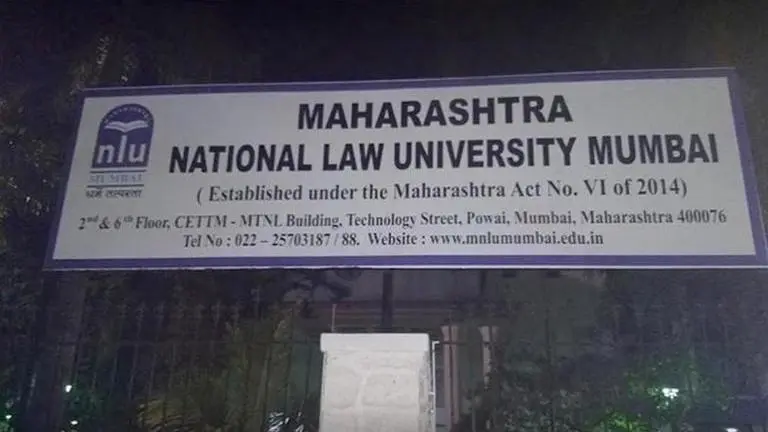
Amidst the ongoing nationwide protests and demonstrations against the Citizenship Amendment Act (CAA), the student council of the Maharashtra National Law University (MNLU) clarified its stance on Tuesday, December 17, against the Citizenship (Amendment) Bill countering the press release shared by its council's president Pratik Irpatgire on December 13, which extended its support to the bill. The student council of the university shared another press release on Monday, December 16, signed by Vice President of the student body, Natasha Maheshwari, which stated that the press release by President Irpatgire was 'unbeknownst' to anyone from the body and was released with utter secrecy. The press release dated December 16, furthermore stated that President Irpatgire's 'personal opinion' has been imputed to that of the entire student body.
Maha National Law University Student Council extends support to JMU students
The press release shared on Monday, December 16, which is also signed by Secretary Aditi Morale, stated that the student body extends its unconditional support to the students of Jamia Millia University and Aligarh Muslim University. This comes after demonstrations by students of the Jamia Millia University against the CAA turned violent after the police allegedly clashed with the students. The incident subsequently sparked protests in several universities across the country exuding solidarity with the students of the JMU and AMU. Furthermore, the press release also stated that President Pratik Irpatgire will no longer continue to serve as the President of the student council of the Maharashtra National Law University.
Advertisement


What is CAB?
The CAB seeks to provide citizenship to the minority communities namely Hindus, Sikhs, Buddhists, Jains, Parsis and Christians from Afghanistan, Bangladesh and Pakistan. This will be applicable to the members of these communities having arrived in India on or before December 31, 2014. Moreover, they will not be considered as illegal migrants. Additionally, the mandatory residence period for naturalised citizenship for these communities would be reduced to 5 years. Several parties in the North East such as the All Assam Students’ Union (AASU) have been vehemently opposed to this Bill. The CAB was passed by the Lok Sabha on Monday after a day-long debate. Two days later, the Upper House of the Parliament cleared the Bill with a majority of 125-105.