
Blue Dragons spotted in Cape Town: What are these mystic creatures? Are they poisonous?
Unique ‘blue dragons’ caused a stir on social media earlier this week after they were discovered at Fish Hoek Beach near Cape Town, South Africa.
- World News
- 2 min read

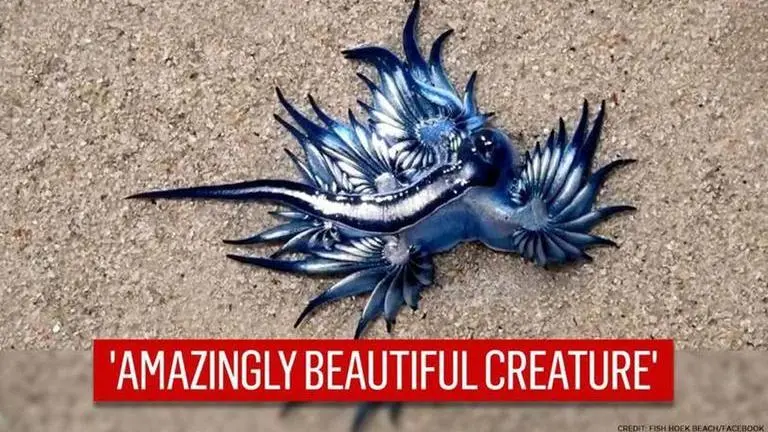
Unique ‘blue dragons’ caused a stir on social media earlier this week after they were discovered at Fish Hoek Beach near Cape Town, South Africa. From internet users calling them “mystic creatures” to “amazingly beautiful”, the blue sea slug has triggered a wave of curiosity about its appearance. With a flat body and tentacles, it looks silvery grey on its dorsal side and dark and pale blue ventrally, with dark blue stripes on its head. The image was recently posted on the Facebook page for Fish Hoek Beach before netizens bombarded with comments.
What are ‘Blue Dragons’?
Also known as Glaucus atlanticus or the ‘blue dragon’ is deemed one of the most fascinating-looking creatures in the ocean. They are simply sea slugs that are nearly an inch long but resemble miniature dragons but do not spit any fire. Sometimes called ‘blue angels’ belong to a pelagic aeolid nudibranch, a shell-less gastropod mollusk in the family Glaucidae. By pelagic, it means that they use gas sac in the stomach to float upside down due to the surface tension of the ocean water to stay afloat. Sometimes, they are carried along with winds and water currents and thus washed up at Cape Town.
Advertisement
Is it poisonous?
The ‘blue dragons’ make up for its tiny size with ferocity. Even though like other sea slugs it is not venomous, the blue dragons’ pull off the poisonous gelatinous mass from another jellyfish with strong jaws and sharp teeth. Its expertise in hunting enables the mystic-looking creatures to store the stinging nematocysts created by the prey’s long and poisonous tentacles. The blue dragons store these stinging cells in concentrated form until threatened or bothered resulting in a more potent sting. Therefore, Glaucus atlanticus can only be dangerous on the beach if they have fed on venomous jellyfish. If it doesn’t find any jellyfish to prey on, blue drugs turn into cannibalism.
Advertisement
Sometimes, beachgoers can end on the painful side of Glaucus atlanticus’ sting. The major symptoms that can follow a blue dragon’s sting are nausea, pain, vomiting, acute allergic contact dermatitis.