
Miami beach set to reduce number of palm trees amid climate concerns
The Miami Beach in Florida could soon cut back on its famous swaying trees. Miami Beach has become a world leader in mitigating the effects of sea-level.rise.
- World News
- 2 min read

;'%3e%3cpath%20d='m8,15.99c4.41,0,7.99-3.58,7.99-7.99S12.41,0,8,0,0,3.59,0,8s3.58,7.99,7.99,7.99Z'%20style='stroke:%23fff;%20stroke-miterlimit:10;%20stroke-width:.02px;'/%3e%3cpath%20d='m3.08,3.37l3.82,5.11-3.84,4.15h.87l3.37-3.64,2.72,3.64h2.94l-4.04-5.39,3.58-3.87h-.86l-3.1,3.35-2.5-3.35h-2.94Zm1.27.64h1.35l5.97,7.99h-1.35l-5.97-7.99Z'%20style='fill:%23fff;'/%3e%3c/g%3e%3c/svg%3e)


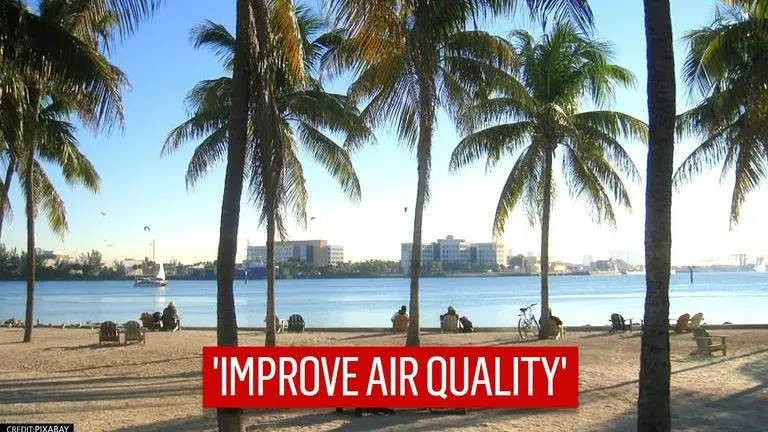
The famous Miami Beach in Florida could soon cut back on its famous swaying palm trees, reported The Guardian. Miami Beach has become a world leader in mitigating the effects of sea-level rise. Miami Beach will now look for more shade-providing alternatives to palm trees so that visitors can escape the scorching sun.
Miami to reduce number of palm trees
According to the urban forestry master plan, which the Miami Beach City Commission unanimously approved in October, officials have embarked on a 30-year plan to reduce the percentage of palm trees in the city to only one-quarter of its total canopy by 2050. About 1000 palm trees will be removed in the coming weeks as part of already scheduled construction projects, reported the Guardian.
Elizabeth Wheaton, the environment and sustainability director for Miami Beach told Guardian that there was no plan for any mass chopping down of palms, which have been a staple of postcards and travel brochures depicting Miami for generations instead percentage reduction will be achieved by planting 1300 new shady trees instead of palms for next two decades.
Advertisement
Palm trees will remain focal point for Miami
Wheaton claims that this will help make the city "more walkable and pleasant". According to Wheaton, the expansion of trees with shade will help "enhance the city's brand and quality of life", the Miami Herald cited it as saying.
Advertisement
According to the urban forestry master plan that forms part of Miami Beach’s Rising Above initiative to combat the climate crisis, about 17 percent of the city’s 15.2 sq-mile footprints has a tree canopy. The plan also describes the environmental benefits of planting shade trees, including species such as oak, ash, elm and sycamore, in place of palms. Even then, palm trees will not be completely fazed out but will continue to be the 'focal point' for Miami.