Canon EOS R6 Mark III Review: The Camera That Rarely Says No
The Canon EOS R6 Mark III brings meaningful upgrades, particularly for people who shoot fast-moving subjects or create videos regularly. But is it worth its price?
- Tech News
- 7 min read

;'%3e%3cpath%20d='m8,15.99c4.41,0,7.99-3.58,7.99-7.99S12.41,0,8,0,0,3.59,0,8s3.58,7.99,7.99,7.99Z'%20style='stroke:%23fff;%20stroke-miterlimit:10;%20stroke-width:.02px;'/%3e%3cpath%20d='m3.08,3.37l3.82,5.11-3.84,4.15h.87l3.37-3.64,2.72,3.64h2.94l-4.04-5.39,3.58-3.87h-.86l-3.1,3.35-2.5-3.35h-2.94Zm1.27.64h1.35l5.97,7.99h-1.35l-5.97-7.99Z'%20style='fill:%23fff;'/%3e%3c/g%3e%3c/svg%3e)


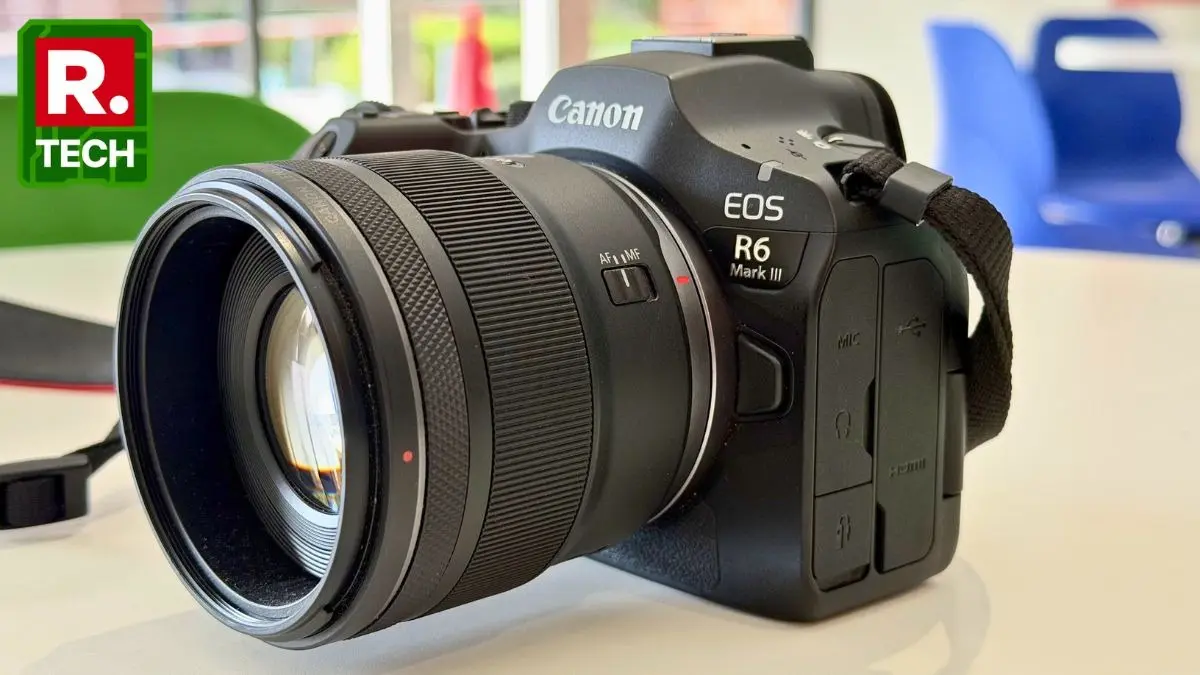
The Canon EOS R6 Mark II was already one of the easiest cameras to recommend to photography enthusiasts and videographers. It struck a sweet spot between performance, image quality, autofocus, and usability without venturing into the territory of prohibitively expensive flagship cameras.
The EOS R6 Mark III builds on that formula.
At ₹2,43,995 for the body alone, it isn't cheap. Add a lens like the RF45mm F1.2 STM, which costs another ₹40,495, and you are staring at an investment that can easily rival the price of a decent motorcycle.
The good news is that Canon hasn't spent the last three years making cosmetic changes.
Advertisement

The R6 Mark III brings meaningful upgrades, particularly for people who shoot fast-moving subjects or create videos regularly. It isn't a revolutionary camera, but after using it extensively, I found it to be one of the most complete hybrid cameras currently available.
What's Good
The new sensor makes a bigger difference than the megapixel count suggests
On paper, the jump from 24MP to 32MP doesn't sound particularly dramatic.
Advertisement
In practice, it is.
The new 32MP full-frame CMOS sensor borrowed from Canon's EOS C50 cinema camera delivers noticeably more detail while maintaining the speed that made the R6 series popular among enthusiasts.
Photos clicked in the fully automatic A+ mode immediately looked richer than what I remember from the Mark II. Fine textures, fabrics, foliage, and architectural details all benefited from the additional resolution.
The improvement becomes even more obvious when cropping into images.
With the Mark II, I often found myself wishing for slightly more resolution when shooting wildlife or events. The Mark III gives you more room to crop without the image falling apart.
Colour science remains classic Canon. Skin tones look natural, colours appear vibrant without being exaggerated, and white balance is accurate most of the time. In particularly tricky lighting conditions, however, the camera occasionally develops a slightly pinkish tone. Most people will never notice it, but experienced photographers probably will.
Autofocus is frighteningly good
The autofocus system feels like Canon borrowed some tricks from cameras that cost significantly more. Whether I was photographing people walking toward the camera, moving vehicles, pets, or birds, the autofocus simply locked on and stayed there.
That's perhaps the biggest compliment I can give it.
The best autofocus systems disappear into the background.
The camera supports subject recognition for humans, animals, and vehicles. Canon has also improved its People Priority feature, allowing the camera to recognise registered faces more reliably.
For event photographers and wedding shooters, that feature alone could save a surprising amount of time.
Burst shooting feels almost unfair
The EOS R6 Mark III can shoot at up to 40 frames per second. That number sounds absurd until you start using it.
I tested it while photographing moving subjects, and the camera essentially gave me a flipbook of moments. Capturing the exact instant someone smiled, a bird took flight, or a vehicle entered the frame became significantly easier.
Canon has also simplified its pre-capture functionality.
The older Raw Burst mode felt clunky and hidden away. The Mark III integrates the feature directly into normal shooting modes, making it far easier to access.
It's one of those quality-of-life improvements that doesn't appear in marketing headlines but genuinely improves the experience.
Video creators finally get what they asked for
This is where the Mark III makes the strongest argument for itself. The camera can record 7K video, oversampled 4K up to 60fps, and 4K at 120fps for slow-motion footage.
Even if you don't fully understand what those numbers mean, the result is simple. Videos look exceptionally detailed.
The faster sensor readout also reduces rolling shutter effects. In plain English, rapid camera movements don't make buildings and objects look like they're melting.
The addition of Open Gate recording is another welcome feature. Recording in a taller 3:2 format gives creators more flexibility to crop footage later for YouTube, Instagram Reels, or TikTok without sacrificing quality.
Canon has also added genuinely useful tools such as waveform monitoring, false colour exposure guides, and LUT previews.
Professional videographers will appreciate them immediately. Beginners may ignore them at first, but eventually discover how useful they are.
Canon finally fixed the HDMI situation
I never understood why expensive cameras continued using fragile microHDMI ports. Canon appears to agree.
The EOS R6 Mark III replaces the microHDMI connector found on the previous model with a full-sized HDMI port.
It sounds like a small change. It isn't.
Full-sized HDMI connections are sturdier, easier to find cables for, and significantly less frustrating when working with external monitors or recorders.
The camera also includes USB-C, microphone input, headphone monitoring, dual card slots, and support for CFexpress Type B cards. The new CFexpress slot is particularly important because RAW video recording demands significantly faster storage than standard SD cards can provide.
Stabilisation is remarkable
The in-body image stabilisation system is rated at up to 8.5 stops. Numbers aside, the practical impact is easy to understand.
I could shoot handheld at slower shutter speeds than I normally would, while videos looked considerably steadier without requiring a gimbal for every situation.
No, it doesn't magically replace professional stabilisation equipment. But it dramatically reduces how often you'll feel the need for it.
Canon's ergonomics remain industry-leading
The R6 Mark III feels immediately familiar. Buttons fall naturally under your fingers. Menus are easier to navigate than most competing systems. The grip remains comfortable even during long shooting sessions.
The fully articulating screen also makes shooting from awkward angles significantly easier.
Whether I was filming myself, shooting low-angle photos, or recording vertical content, the display remained useful.
What's Bad
RAW workflow still feels unnecessarily complicated
Canon continues using its .CR3 RAW format. There's nothing inherently wrong with the format itself.
The problem is that many users still end up relying on Canon's software during parts of the workflow. The mobile app can help convert and transfer files, but the process still feels less seamless than it should in 2026.
It's hardly a dealbreaker, but it remains one of those small annoyances you repeatedly encounter.
The electronic shutter comes with compromises
The 40fps burst mode is fantastic. However, using the electronic shutter reduces RAW files to 12-bit capture instead of 14-bit.
For most people, the difference will be invisible. For photographers who routinely push shadows and highlights aggressively during editing, the reduction in dynamic range can become noticeable.
In other words, the camera's most impressive shooting mode isn't always the best one to use.
Heat still exists
The R6 Mark III is not actively cooled. For photography, that rarely matters.
For video creators pushing 7K recording or extended high-frame-rate capture, heat can eventually become a limitation. Most users will never encounter the issue.
People recording long interviews, events, or commercial projects might.
Buffer clearing could be faster
At 40fps, the camera can generate a ridiculous amount of data.
Eventually, all that information needs to be written to the memory card.
The camera handles this well most of the time, but there were occasions where I found myself waiting longer than expected for the buffer to clear completely.
It's not a major issue. It's simply the price of shooting dozens of high-resolution frames every second.
Canon's RF ecosystem is still expensive
The camera body itself is expensive. The lenses can be even more intimidating.
Canon's RF lineup includes some phenomenal optics, but many of them remain priced beyond the comfort zone of enthusiasts upgrading from older DSLR systems.
The RF45mm F1.2 STM lens supplied with my review unit produced excellent results, but it also serves as a reminder that building a complete RF kit requires serious financial commitment.
Verdict
Rating: 4/5
The Canon EOS R6 Mark III doesn't reinvent the R6 formula. It refines it.
The new 32MP sensor delivers more detail, the autofocus is among the best I've used, burst shooting is absurdly fast, and the video features finally make the camera feel equally suited to photographers and creators.
There are compromises. RAW workflows could be smoother, overheating remains a possibility during extreme recording sessions, and Canon's lens ecosystem continues to test the limits of your bank account.
But none of those issues fundamentally change my conclusion.
The EOS R6 Mark III is the camera I would recommend to someone who wants one body to do almost everything.
Sports photography?
Yes.
Wildlife?
Absolutely.
Weddings?
Without question.
Professional video work?
Mostly yes.
At ₹2,43,995, it isn't an impulse purchase. But if your work or passion demands a camera that rarely says no, the EOS R6 Mark III comes remarkably close to being the complete package.
Camera Samples