Google-Backed Apptronik Opens 'Robot Park' to Train Humanoid Robots for Real-World Jobs
The facility has been developed in collaboration with Google DeepMind, with the collected data helping train Gemini Robotics, Google's AI model for robots.

;'%3e%3cpath%20d='m8,15.99c4.41,0,7.99-3.58,7.99-7.99S12.41,0,8,0,0,3.59,0,8s3.58,7.99,7.99,7.99Z'%20style='stroke:%23fff;%20stroke-miterlimit:10;%20stroke-width:.02px;'/%3e%3cpath%20d='m3.08,3.37l3.82,5.11-3.84,4.15h.87l3.37-3.64,2.72,3.64h2.94l-4.04-5.39,3.58-3.87h-.86l-3.1,3.35-2.5-3.35h-2.94Zm1.27.64h1.35l5.97,7.99h-1.35l-5.97-7.99Z'%20style='fill:%23fff;'/%3e%3c/g%3e%3c/svg%3e)


Humanoid robots are inching closer to becoming a part of everyday workplaces, and Google-backed Apptronik believes the key isn't building smarter robots, but giving them more real-world experience.
The Austin-based robotics startup on Tuesday unveiled Robot Park, a nearly 90,000-square-foot facility designed to train fleets of humanoid robots by having them perform practical tasks such as logistics, manufacturing, and retail operations. The data collected from these activities will be used to improve artificial intelligence models powering future robots.
The announcement comes as the race to commercialise humanoid robots intensifies, with companies including Tesla, Figure AI, Agility Robotics, and Boston Dynamics all developing machines that could eventually work alongside humans in factories and warehouses.
A Factory That Produces Data
Unlike traditional robotics labs, Robot Park is designed to function as both a testing ground and a data-generation centre. The facility houses multiple humanoid robots carrying out repetitive industrial tasks, allowing Apptronik to collect large volumes of real-world data that can be fed into AI systems.
Advertisement
"We have a factory that produces robots, we also have a factory that produces data," Apptronik CEO Jeff Cardenas said, describing Robot Park as the company's engine for building production-ready AI models.
The facility has been developed in collaboration with Google DeepMind, with the collected data helping train Gemini Robotics, Google's AI model for robots.
Advertisement
Meet Apollo 2
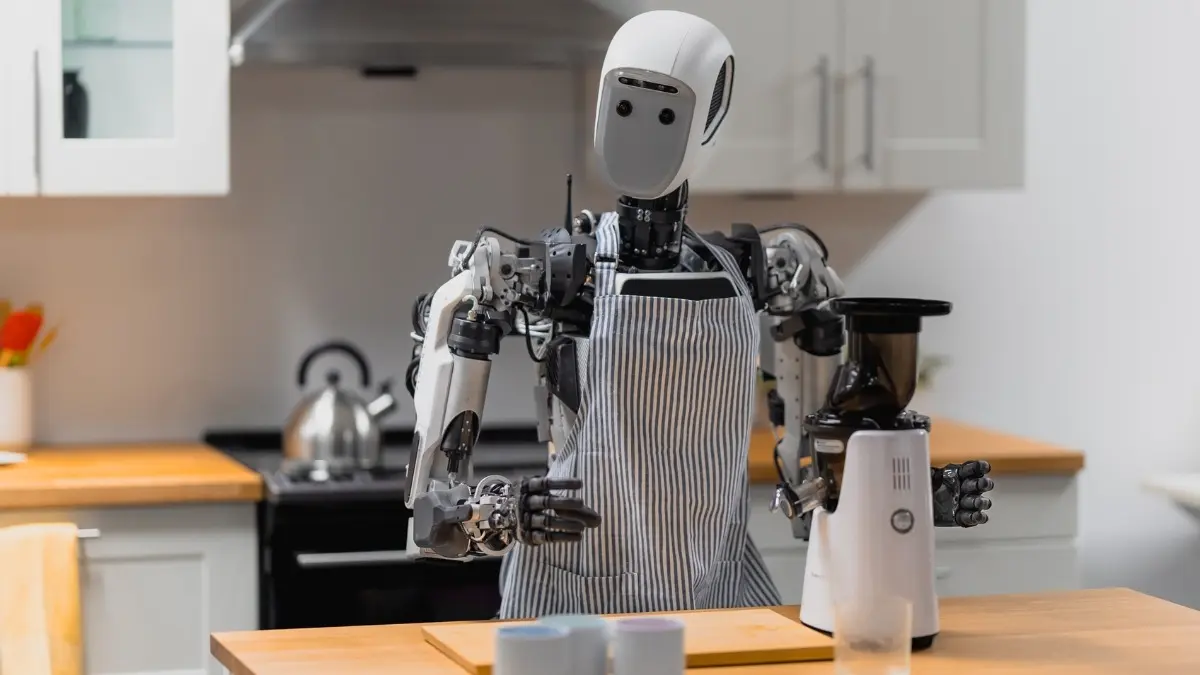
Alongside the new facility, Apptronik also introduced Apollo 2, the latest version of its humanoid robot. The robot is available in both bipedal and wheeled variants, depending on the task it needs to perform. According to the company, Apollo 2 has already spent more than a year operating as its primary data collection platform.
Rather than showcasing flashy demonstrations, Apptronik says the robots have been quietly carrying out practical work to improve their understanding of real-world environments before commercial deployment.
Commercial Rollout Still Some Time Away
Although Apptronik has already built hundreds of Apollo 2 robots, widespread deployment is still a work in progress. The company says it will continue pilot programmes throughout 2026 before moving to larger production deployments beginning in 2027 and beyond.
"We'll continue to pilot through this year, and then we'll start to see real production versions," Cardenas was quoted as saying in a Reuters report.
The cautious timeline reflects one of the biggest challenges facing humanoid robotics. While AI has advanced rapidly, teaching robots to perform physical tasks reliably remains far more difficult than generating text or images.
Google's Robotics Bet Continues
The announcement also highlights Google's growing interest in robotics. Earlier this year, Google DeepMind introduced Gemini Robotics, an AI model designed to help robots better understand instructions, interact with objects, and adapt to unfamiliar environments.
Its partnership with Apptronik gives Google access to one of the industry's most valuable resources: large-scale, real-world robotics data. Unlike AI chatbots, humanoid robots need to learn from physical interactions, making high-quality training data considerably harder to obtain.
A Crowded Race to Build Humanoid Robots
Apptronik is far from alone in the race. Tesla continues developing its Optimus robot, Figure AI has secured partnerships with major manufacturers, while Agility Robotics has already begun deploying its Digit robot in warehouse environments.
Apptronik's strategy differs slightly. Instead of rushing robots into workplaces, it is investing heavily in collecting the data needed to make them reliable enough for large-scale deployment.
The company raised $520 million in February at a valuation of around $5 billion, giving it the financial backing to pursue that long-term approach. Reuters
For now, Robot Park isn't a factory replacing human workers. It's a training ground where robots learn how to become useful employees. If Apptronik's bet pays off, those lessons could eventually shape the next generation of AI-powered machines entering factories, warehouses, and retail stores around the world.